Why luxury South Africa is more than safari
The first time I priced a “luxury South Africa” itinerary, the numbers looked suspiciously safari-heavy—then I realized the spend isn’t just about animal density, it’s about friction: how many times you repack, how often you sit in traffic, and whether your best meals happen at 9pm or get squeezed between transfers.
Safari is the headline, but the luxury difference often shows up elsewhere: a Cape Town base that’s walkable (or you’ll Uber constantly), restaurant bookings that require forethought (or you’ll default to whatever has a table), and day touring that’s private (or you’ll lose hours to hotel pickups). None of this is “mandatory,” but it changes how rested you feel by day five.
Think of South Africa as a three-act trip—bush, city, vines/coast—and decide where you want ease versus intensity. Optimizing for “more places” usually costs you the one thing money can’t buy back on this trip: unfragmented time.
Choose your anchors: safari region and lodge style
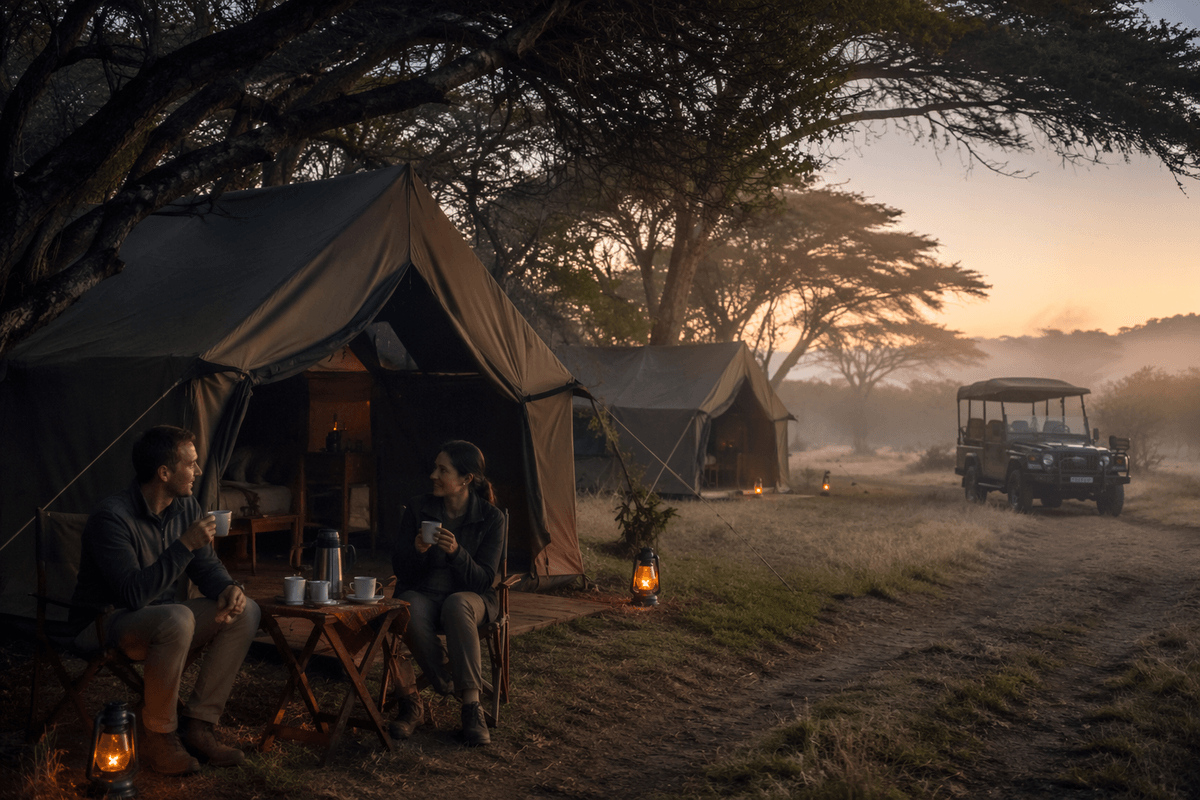
On my first real planning pass, I got stuck on a deceptively simple question: do we want “maximum sightings” or “maximum calm”? That answer usually determines your safari anchor. Greater Kruger (including the private reserves on its edges) tends to reward you with excellent wildlife and relatively efficient access, but you’re still making a choice about logistics—easy flights and short drives versus a longer hop to somewhere more remote that can feel rarer but eats into your first and last day.
Then pick lodge style with the same honesty you’d apply to a hotel in a big city. A larger, polished lodge can feel effortless—bigger rooms, stronger bar program, more predictable service—but it can also mean more vehicles in the mix at sightings and a slightly “scheduled” rhythm. Smaller camps often feel more personal and flexible (especially if you’re the kind of couple that likes lingering over coffee before a drive), yet they’re less forgiving if you land on a room you don’t love or if weather pushes you indoors.
Two quick filters that save time: decide whether you’re comfortable in a malaria area (that can expand options, but adds pre-trip admin), and decide how much private guiding matters to you. Paying for a private vehicle is pricey, but it’s the cleanest way to control pace—longer at leopards, fewer radio-chasing sprints, and no negotiating wake-up energy with strangers.
Add Cape Town: design, food, and coastal scenery
I hesitated over Cape Town because it’s the part of the trip that looks “optional” on paper—until you price the time you’ll burn if you treat it like filler between flights. For a 10–14 day itinerary, Cape Town works best as a real anchor: three nights minimum if you want one “big” day (Cape Peninsula) plus one food-focused day without living by the clock. Two nights can work, but it often turns into a stressful highlights reel where you’re packing again right when you’ve figured out your neighborhood.
Where you stay matters more than a slightly nicer room. A genuinely walkable base (Sea Point/Green Point, parts of Gardens, or near the V&A if you accept it’s more touristy) reduces the daily Uber choreography and makes last-minute dinners realistic; the wrong location quietly adds 30–60 minutes of friction every day. If you care about design, Cape Town is one of the few places where you’ll actually notice the upgrade—thoughtful interiors, art, and service land differently after safari—yet the trade is you’ll pay more and still need reservations for the restaurants you actually want.
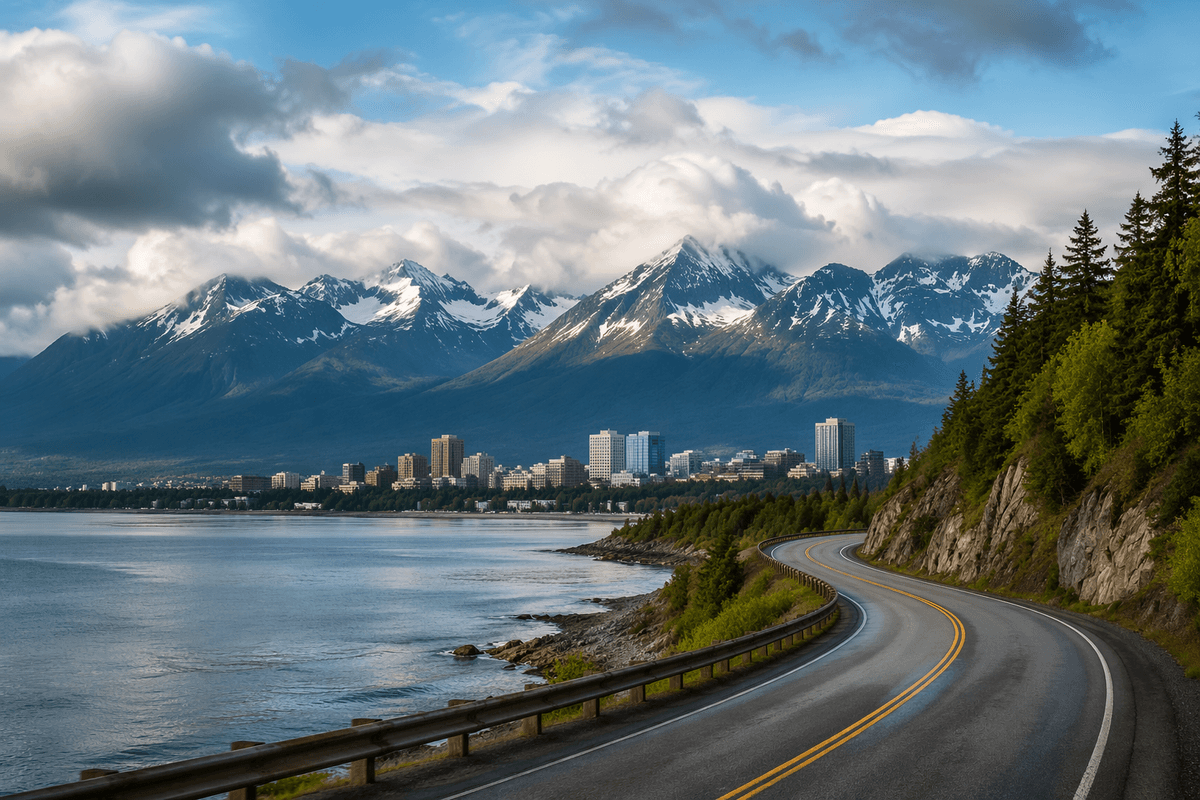
For coastal scenery, I’d choose one: Table Mountain/City Bowl viewpoints or the full Peninsula loop. Doing both back-to-back is doable, but weather can wreck your plan (the mountain closes more often than people admit), so a private guide earns their keep here by pivoting fast—Chapman’s Peak when it’s clear, penguins and vineyards when it’s not—rather than waiting in lines and hoping your timing holds.
Beyond the classics: Winelands, Garden Route, and whales
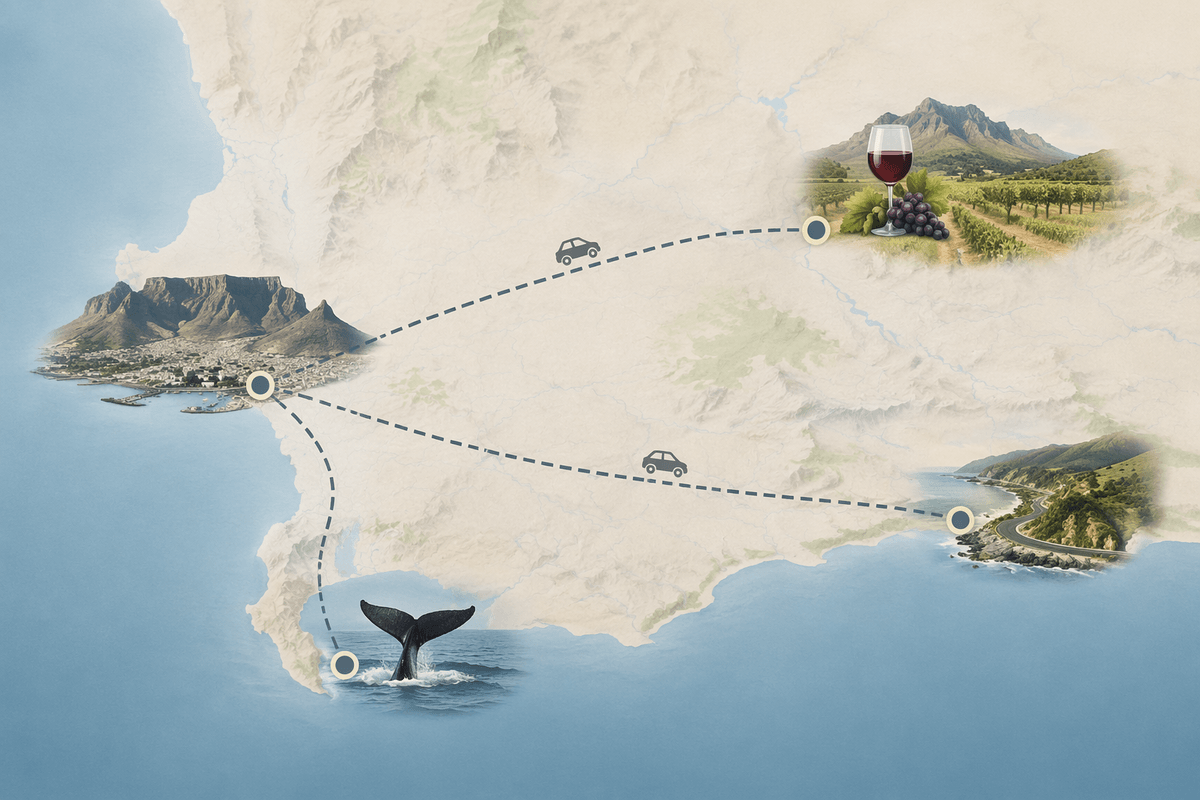
The moment Cape Town starts to feel “handled,” you’ll be tempted to bolt on everything: Stellenbosch, Franschhoek, the Garden Route, Hermanus. The constraint is days—each add-on is easy to sell and hard to stack without turning your trip into a moving day every other morning. If wine is a real priority, the Winelands are the cleanest upgrade per hour: you can do them as a long day with a driver, but an overnight buys you slower tastings and better lunches, at the cost of another hotel change (and the quiet risk of ending up somewhere pretty but inconvenient).
The Garden Route is different: it’s not “a place,” it’s a string of decisions about how much driving you’ll tolerate. Self-driving gives you freedom and better value, but it’s mentally expensive after safari early mornings; a flight hop can feel luxurious, yet it fragments the day with airport time. If you only have a couple nights, pick one base (not three towns) or you’ll spend your best daylight in the car.
For whales, treat it like a seasonal bonus rather than a guaranteed pillar—when it lines up, Hermanus (or a coast night further along) can be thrilling, but building the whole routing around a single wildlife moment can backfire if weather, swell, or timing doesn’t cooperate.
Signature splurges: private guides, flights, and exclusives
Halfway through building a “luxury” itinerary, I always hit the same hesitation: do we spend on one or two big upgrades that change the feel of the days, or spread it across nicer rooms that mostly photograph well? In South Africa, the upgrades that reliably shift your experience are the ones that remove coordination: a private guide/vehicle on safari (and often in Cape Town), and one or two smart flight hops that prevent an entire day from dissolving into check-ins, waits, and road fatigue.
Private guiding is the cleanest lever for pace, but it’s only worth it if you’ll use the control. If you like slow breakfasts, longer at a sighting, or you’re picky about driving style and photography angles, it pays back immediately; if you’re happy to be “carried” by the lodge schedule, it can feel like an expensive duplication. Flights are similar: they’re fantastic when they replace a genuinely grinding transfer, but they’re a poor splurge when they add airport friction to a route that was already simple.
For exclusives—private tastings, after-hours access, special dinners—be selective. One curated, story-rich experience can anchor a whole region; stacking several can start to feel programmed, and you’ll notice it most on a 10–14 day trip when you’re already managing early mornings and energy.
Putting it together: matching trip length to priorities
On a 10–14 day trip, the most useful planning move is admitting you can’t maximize everything at once—because every “extra” is paid for twice: in money and in momentum. If you hate repacking, protect three longer stays; if you’re restless, accept that you’ll feel the airports and early alarms more sharply by the second week.
At 10 days, I’d prioritize one safari anchor and Cape Town, then treat wine/coast as a single, high-quality add-on rather than a checklist—otherwise your schedule becomes transfer-driven. At 12 days, you can slow the pace without inflating complexity: add breathing room for weather in Cape Town and one unstructured day so you’re not forced into the same “big day” pattern. At 14, you earn the right to upgrade the rhythm (later starts, longer lunches), but only if you don’t keep adding overnight hops.
If you’re stuck between itineraries, choose the one with fewer single-night stops and the most control where you care: private guiding where pace matters, and simplicity where it doesn’t. Book around the days you want to feel calm—not the map.