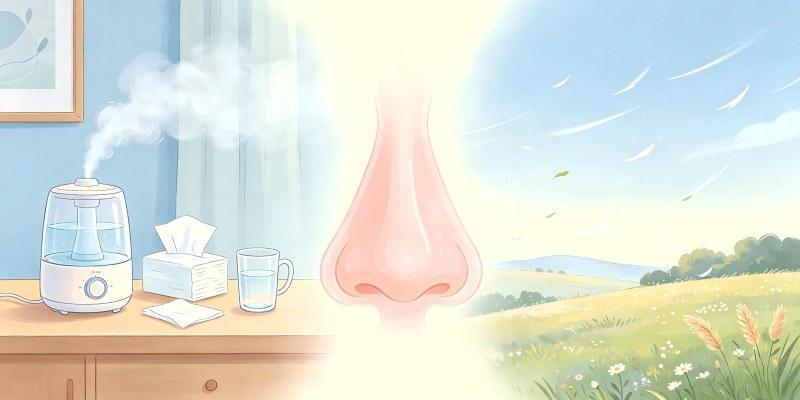
Dry air turns nasal lining from flexible to fragile
You notice it first when you inhale: the air feels sharp, like it doesn’t “land” softly in your nose. A few hours into a heated office or after a night with the furnace running, your nostrils can start to feel tight and papery. Then, when you blow your nose or wipe it, there’s that small surprise—pink on the tissue—from somewhere that didn’t feel injured a moment ago.
The lining inside the nose normally stays slightly slick and elastic, so it can handle airflow, dust, and the occasional hard blow. In dry air, that thin moisture layer evaporates faster than it’s replaced. Over time the surface can lose its flexibility, and mucus that would have stayed smooth starts to thicken and stick. It may feel like “just dryness,” but it’s also a change in how easily the tissue can bend without getting stressed.
Once the surface gets drier, tiny crusts can form where mucus dries in place. Those spots tend to tug when you breathe, rub, or blow—especially if you’re doing it often because you feel blocked. The nose feels dry, so you touch it more, but the dryness makes the lining less forgiving, and even minor friction can be enough to start a bleed.
Tiny surface vessels sit close to the action
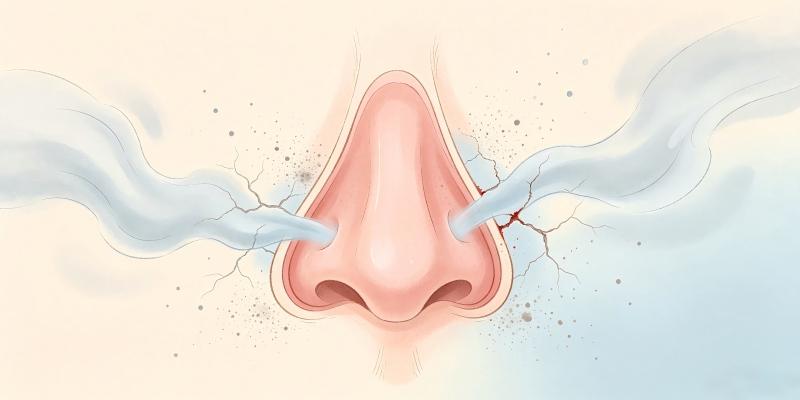
Sometimes it isn’t the whole nose that feels dry—just one small spot near the front that stings when air hits it. You might keep wiping the same nostril without thinking much of it, and then a quick blow produces a brighter red streak than you expected for something that “barely hurt.”
The front part of the nasal lining has a dense network of very small blood vessels that sit close to the surface. When the lining is moist and supple, that surface layer acts like a cushion. As it dries and thins, those vessels are still doing their normal job—warming and humidifying incoming air—but they’re now separated from the outside world by less protection.
That’s why winter nosebleeds can feel oddly specific: a fingertip, a tissue edge, or the pressure of a strong nose blow doesn’t need to be dramatic. If it lands on the wrong spot, it can nick a vessel that’s already exposed by dryness, turning a moment of irritation into a bleed that seems out of proportion.
Crusting and microcracks create repeat bleeding sites
You can sometimes feel it before you see it: a rough patch that catches when you sniff, or a sting that shows up every time you inhale cold air. The next morning, the same nostril seems “stuck,” and when you finally clear it with a firm blow, the tissue comes away with a small smear of blood—again, from what feels like the exact same place.
When mucus dries onto the lining, it doesn’t just sit there like dust. It can harden into a crust that lightly anchors to the surface. As you breathe, talk, sleep with your mouth open, or wipe your nose, that crust can shift and tug. The skin-like surface underneath is already less stretchy in dry air, so the pulling force concentrates into tiny stress points.
They’re small enough that you may not notice any “injury,” but they create a repeat site: a fragile edge that opens with friction, then dries again, then reopens the next time you clear your nose. It can make nosebleeds feel random, even though the pattern is more like a scab in a high-traffic spot that keeps getting disturbed.
Indoor heating and wind amplify moisture loss quickly
You might notice it when you step outside for a minute and come back in: your nose feels suddenly “too open,” then oddly scratchy. Or you wake up in the same room you fell asleep in, but your nostrils feel raw, like they’ve been lightly sanded overnight. Nothing dramatic happened—just air moving and warming.
Indoor heat often lowers relative humidity, so the moisture film on the nasal surface evaporates faster. Add airflow—vents, fans, car heaters, a windy walk—and the effect can jump. Moving air strips moisture the way a breeze dries wet hands: the surface doesn’t get a chance to stay slick.
That’s why bleeds can cluster around routines that seem harmless. A dry, warm room can thicken mucus into stickier patches, and wind can dry the front of the nose where those fragile edges already form. It may feel inconsistent, but the trigger is often speed: how quickly the lining dries between one wipe and the next.
Allergies and colds add inflammation plus friction
It often starts as a “normal” sniffle: your nose runs, then suddenly it doesn’t, and you’re left with that swollen, itchy feeling that makes you rub the tip of your nose without noticing. A few hours later, you blow again—harder this time because one side feels sealed—and the tissue comes away with a thin red line that doesn’t match how mild the cold or allergy symptoms feel.
With allergies or a cold, the lining can get puffy and reactive. Even before the air feels particularly dry, inflammation can make the surface more sensitive and easier to irritate, while the extra mucus changes how often you wipe and clear your nose. That’s the trade-off: more fluid and more congestion at the same time, which can lead to more contact with tissues, fingers, or the pressure of repeated blowing.
In that state, crusting and microcracks don’t always come from “being dry” alone—they can come from friction layered on top of dryness. A congested nose pushes you to clear harder, and the swollen tissue narrows the space so airflow and contact are concentrated in the front. If the same spot keeps getting stressed, it may open, dry, and reopen in a way that makes the bleeding feel sudden, even though the irritation has been building for days.
Reasonable fixes can backfire and irritate more
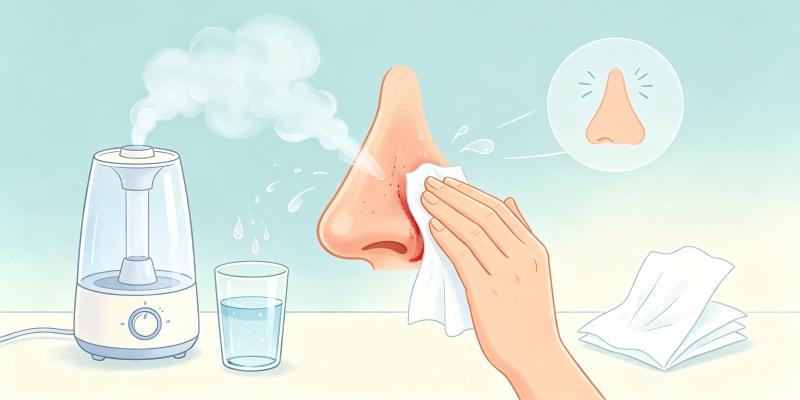
A little sting can make you reach for the fastest fix: a hard blow, a deeper tissue twist, maybe a quick cotton swab to “clean it out.” For a minute it feels clearer, but the next inhale hits a tender spot and you’re back to tasting blood. That’s the frustrating part—what feels like basic maintenance can turn into another round of irritation.
In a dry nose, crusts often act like tiny caps over those microcracks. When you peel them off quickly—by picking, swabbing, or even rubbing with a dry tissue—you can lift the fragile surface underneath before it’s had a chance to re-seal. Some decongestant sprays can add to the problem, too: less swelling can feel like relief, but the surface may end up even drier and more exposed afterward.
Strong mentholated balms, fragranced products, or frequent saline rinses done forcefully may leave the lining feeling more raw, not because they’re inherently bad, but because the tissue is already touchy and the front of the nose is easy to over-handle. Often the difference is less about the product and more about how much friction the irritated spot has to take that day.
Who notices it most and when to worry
The pattern is often clearest in the people who wake up with a dry mouth and a tight, stingy nose—mouth breathers, light snorers, or anyone who sleeps near a vent. It also shows up in “one-sided” bleeders: the same nostril, the same front spot, usually after a shower-to-heated-room change or a commute with the car heat aimed at your face. If you’re blowing frequently for mild allergies, you may notice the bleeding isn’t heavy—it’s just easy to trigger, like the surface has lost its buffer.
Where it gets confusing is that it can look worse than it is. Bright red blood on a tissue can come from a very small surface vessel, and it may stop quickly once the rubbing and airflow settle down. But some situations deserve more caution: bleeding that won’t stop with steady pressure after about 20 minutes, bleeds that are getting heavier or more frequent despite gentler handling, or bleeding paired with dizziness, weakness, shortness of breath, or large clots. If you’re on blood thinners, have a known bleeding disorder, or the bleed follows a hit to the nose or face, it’s worth treating it as higher-stakes rather than “just winter dryness.”
And if it keeps returning to the exact same spot, that’s often your clue—less mystery, more mechanics. A single fragile edge can keep reopening until the cycle of crusting and friction finally breaks.