Why solo cruising feels tricky—and worth it
I almost bailed on my first solo cruise at the booking screen—not because I hated the idea, but because the price kept jumping once the “from” fare turned into a single supplement. That’s the first trick: cruising looks simple until you’re solo, when cabin inventory, promo rules, and category quirks start mattering more than the itinerary.
Onboard, the friction is different. Dinner can feel awkward if the line defaults you to couples’ tables, and “solo meetups” range from genuinely hosted gatherings to a calendar listing with no staff and ten minutes of small talk. Still, when it clicks, it’s unusually efficient: you unpack once, you can be social without committing to a group trip, and a 7–10 night sailing can deliver real downtime without spending half your vacation days in airports.
What solo travelers should prioritize onboard
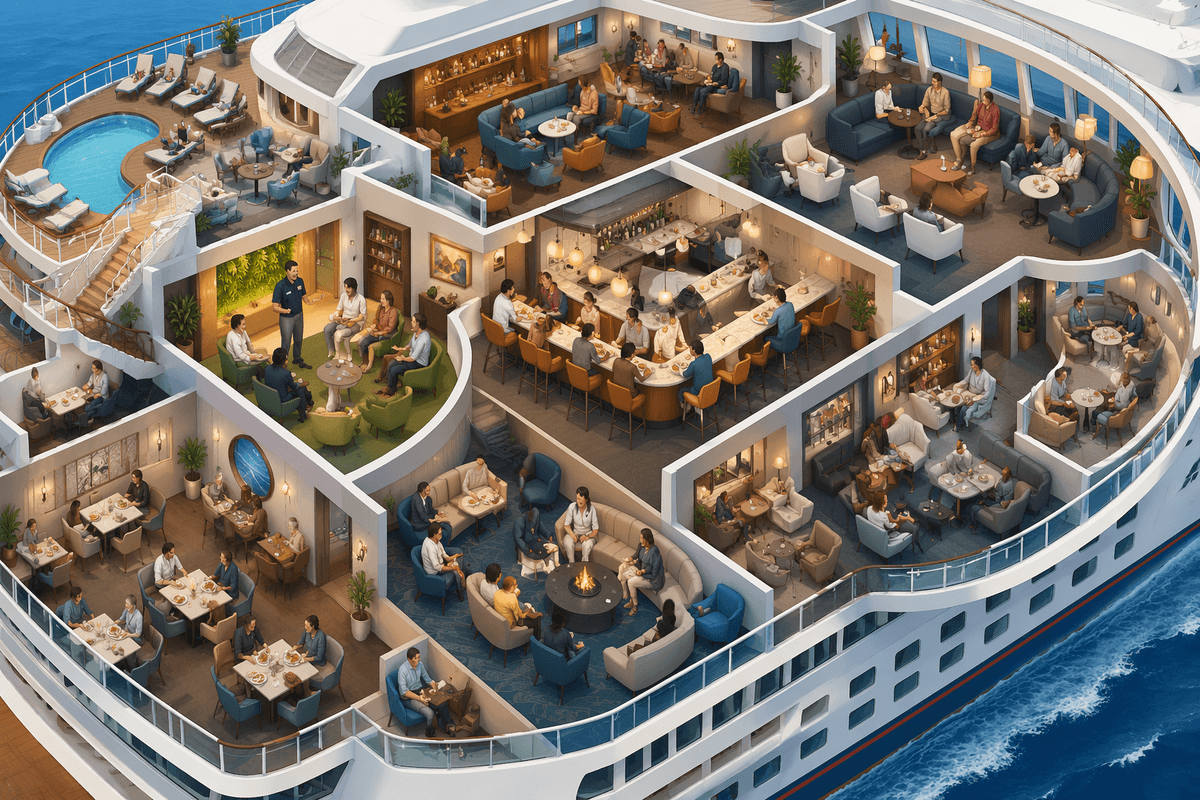
The first night, I learned that “solo-friendly” isn’t a vibe—it’s logistics. If a ship makes you pick an early fixed dining time and a table assignment up front, you’re effectively committing to the same social setting for a week, which can be great or quietly miserable. Lines that offer flexible dining plus a real communal option (shared tables that don’t feel like leftovers) make it easier to be social on your terms, especially when you’re tired after a port day and don’t want to perform.
I’d prioritize three onboard factors before obsessing over cabin categories: (1) whether solo meetups are actually hosted (a crew member who corrals introductions changes everything), (2) how the ship handles “single” dining (solo-friendly venues, bar seating that’s meant for eating, not just waiting), and (3) the ship’s social architecture—lounges that encourage casual conversation versus cavernous spaces where you can disappear. Bigger ships can give you more programming and anonymity, but they also scatter people; smaller ships can feel instantly familiar, but you’ll notice quickly if the crowd skews heavily couples.
Safety and comfort matter too, but in practical ways: well-lit routes back to cabins, staff presence late at night, and how easy it is to exit a conversation without it getting weird. Those are small signals, and they’re often more predictive than the marketing copy.
How we’re judging the “best” cruise lines
I started scoring lines the moment I realized two “same price” sailings could be wildly different once solo inventory and promos kicked in—and that a “solo program” on paper doesn’t guarantee you’ll meet anyone in practice.
So we’re judging “best” on a mix of hard logistics and lived friction: how often true solo cabins appear (and how fast they vanish), how consistently solo meetups are actually hosted, and whether dining setups make it easy to join a table without feeling like you’re crashing date night. We’re also weighing ship design—big ships offer more activities but can dilute community; smaller ships bond faster but can skew couples-heavy.
Finally, we’re looking at the real cost, not the brochure fare: single supplements by cabin type, what “free” perks replace (or hide) higher base pricing, and whether a good deal is tied to a sailing date that burns too many vacation days getting there.
Best mainstream lines for easy social cruising
I started noticing the “social” lines weren’t always the ones with the loudest marketing—they were the ones where the ship made it normal to sit down alone without looking like you were waiting for someone. In mainstream cruising, Norwegian is usually the cleanest fit for that, largely because solo cabins (when they’re offered on that ship) remove the psychological sting of paying nearly-double just to sleep there, and the solo lounge concept gives you a built-in starting point. The catch is availability: those cabins can disappear early, and if you miss them you’re back in regular inventory where the math can get ugly fast.
Royal Caribbean and Carnival can work surprisingly well if you want constant background energy and lots of “accidental” conversation—trivia teams, late-night comedy, busy pool decks—without having to join an official singles event. The limitation is that you may feel a bit untethered on mega-ships unless you pick a few repeating anchors (same bar at happy hour, same morning activity), and the dining setup varies by ship; flexible dining helps, fixed seating can make you feel stranded if your table vibe is off.
MSC is the wild card: sometimes it’s the best-value way onto a newer ship, which matters on a mid-range budget, but the solo experience can swing hard by itinerary and passenger mix. If your vacation days are tight, I’d only shortlist it when the sailing times and total pricing are clearly better—not just the headline fare.
Best premium and luxury lines for quieter solo trips
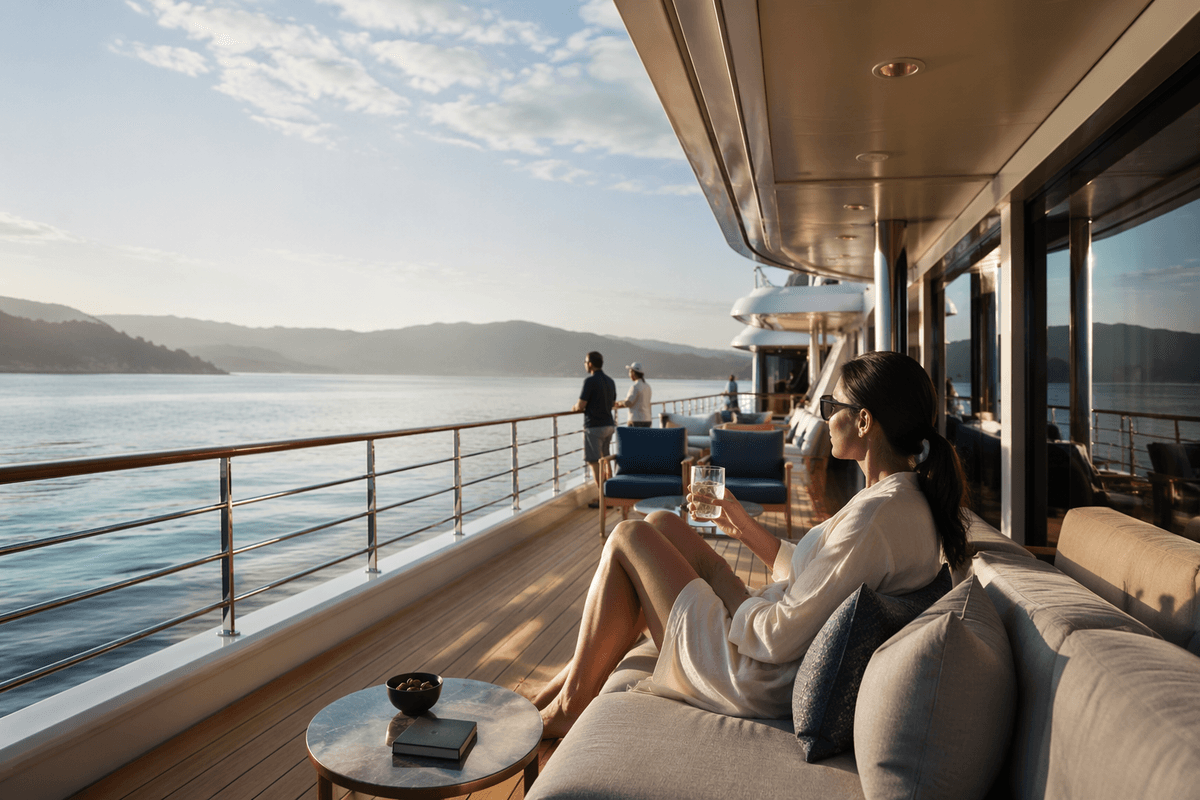
I hesitated to even look at “premium” lines because I assumed they’d be couples-only and quietly judgmental—but the first time I priced a mainstream sailing with a brutal single supplement, the premium math stopped looking outrageous. The experience is calmer and more predictable (fewer crowds, fewer hard-sell moments), but you’re trading away the easy, high-volume social churn you get on big mainstream ships. If you’re taking 7–10 nights with limited vacation days, that predictability can be worth more than a water slide you’ll use once.
Celebrity is often the sweet spot if you want a modern ship, strong food, and a vibe where eating alone doesn’t feel like a statement—especially in venues with bar seating designed for actual dinner. It can still skew couples, though, so the social plan works best if you like low-stakes conversation (wine bars, pre-dinner lounges) rather than “singles night.” Princess and Holland America lean more traditional: great if you want live music, lectures, and early nights, less great if your energy runs later or you’re hoping for lots of same-age solos.
On the true luxury end—Regent, Silversea, Seabourn—the upside is that inclusive pricing can blunt the sticker shock of going solo, and smaller ships make it easier to recognize faces by day two. The constraint is that small-ship dynamics amplify mismatch: if the passenger mix lands heavily on couples or a much older crowd on your specific sailing, you can’t “hide” in sheer ship size. Here, I’d pick itinerary first, then verify solo supplement policies sailing-by-sailing before you fall in love with the brand name.
Choosing your match—and booking without overpaying
I usually decide with a quick “deal-breaker check” before I get seduced by a route: do you actually want built-in solo structure (Norwegian-style solo spaces), or do you prefer looser, ambient social energy (Royal/Carnival) where you can dip in and out? If you pick the wrong social format, the ship can feel either too isolating or too loud—especially on a 7–10 night cruise when you can’t just “wait it out” for a weekend.
Next, price it like a solo traveler, not like a brochure: run the same sailing across two cabin categories and watch how the single supplement behaves. The annoying reality is that the “best line” can lose instantly if you miss solo inventory or if a promo quietly applies unevenly by cabin type.
My final filter is simple: choose the sailing where the total cost and schedule feel clean, then book the line whose social setup matches your tolerance for awkwardness. You’re not chasing perfection—you’re reducing the ways it can go sideways.