Why intermittent fasting appeals in real life
The first time someone skips breakfast on purpose, it can feel oddly clean—one less decision, one less mess, and a morning that moves faster. For busy schedules, that simplicity is the main draw: fewer eating moments to manage, fewer chances to graze, and a clear “not yet” that can be easier than constant moderation.
But the appeal usually isn’t willpower—it’s timing. A later first meal can compress eating into a smaller window, which may naturally cap calories without tracking. It also changes the usual appetite rhythm: some people notice hunger quiet down after a few mornings, while others feel edgy, foggy, or overly focused on food as noon approaches.
The same structure that removes snacking can also set up “catch-up” eating later. If the day runs long or stress stays high, the first meal can turn into a hard-to-stop reset button, and the benefits people expected—steady energy, lighter evenings—start to look less predictable.
Daily routines that determine whether fasting is workable
It often shows up first in the calendar, not the stomach: a mid-morning meeting runs long, coffee carries you farther than expected, and then hunger arrives all at once right when you can’t step away. In that moment, fasting can feel “easy” or impossible depending on whether your day has natural breaks—or forces you to push through on fumes.
Workouts are another quiet pressure point. If you train early, the gap between effort and your first meal can make recovery feel delayed, even if the workout itself is fine. Some people compensate without noticing: bigger portions at lunch, extra bites while making dinner, a snack that turns into a second dinner because the body is still trying to catch up.
Evenings tend to reveal the pattern. A tight eating window can simplify nights, but if your first meal is late and stress is high, the window may drift later and later. That mismatch—late eating plus early wake-ups—can leave appetite and sleep tugging in opposite directions.
Hunger, energy, and mood shifts over time
A few days in, it’s common to notice that hunger doesn’t rise smoothly—it comes in waves. The first week can feel surprisingly steady until a specific trigger hits: a bakery smell on the commute, a stressful email, the first real lull between tasks. If you’ve been “fine” and then suddenly feel shaky or impatient, that swing can be more about timing than true shortage, especially when your last meal was lighter than you remember.
Energy often looks better on paper than it feels in a chair. Some people get a calm, focused stretch in the late morning, while others feel flat and distracted, as if the brain keeps checking for food in the background. Caffeine can blur the signal early, then amplify the crash later—so the day seems productive, but mood gets short and decisions get louder by mid-afternoon.
Over a few weeks, the pattern that matters most is what happens after the first meal. If lunch turns into a quick spike and a nap-like dip, the window may be encouraging fast eating, larger portions, or meals that are low on protein and fiber—things that can make hunger rebound hard in the evening, right when restraint is already worn thin.
When an apparently healthy fast backfires
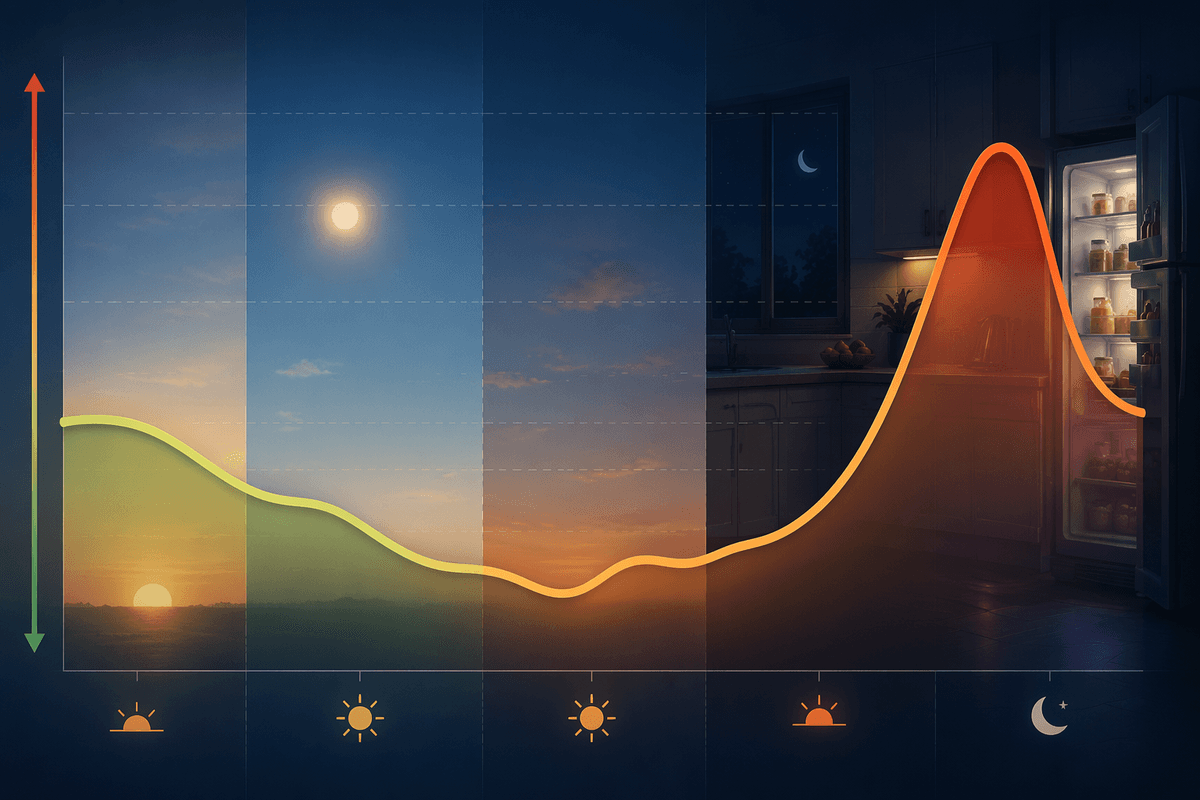
It can start as a “good” day: you make it to lunch without snacking, feel in control, and even forget about food for a while. Then dinner shows up and the calm turns into urgency—bigger servings, faster eating, and a strange sense that you’re still not caught up, even after you’re physically full.
That backfire often isn’t about discipline so much as compensation. A long gap can push your first meal later, but it can also make that first meal do too much work: restoring energy, smoothing mood, and covering calories you didn’t get earlier. If lunch is rushed or light, the body tends to keep “asking” in the evening, when stress is higher and the kitchen is close.
Sleep can get pulled into it too. When the eating window drifts late—because that’s when you finally feel hungry—bedtime sits on top of digestion, and the next morning’s appetite cues may feel even noisier. The routine still looks consistent, but the signals underneath it may not be.
Health goals that change the fasting trade-offs
The trade-off often becomes obvious when you’re staring at your lunch and realizing it’s doing double duty—fueling the afternoon and “making up” for the morning. If your main goal is weight loss, that compression can help when it leads to fewer eating episodes. But if the first meal is rushed or turns into a reward for getting through the fast, the window can quietly train bigger, faster eating that’s hard to keep consistent on workdays.
Energy-focused goals can flip the priorities. A later first meal may feel mentally clean, yet workouts, long drives, or back-to-back meetings can expose the downside: you’re not just hungry, you’re less patient and more snack-seeking once the window opens. Muscle or performance goals add another friction point—long gaps can make it harder to hit enough protein and total intake without feeling overly full at night, especially when dinner is the only unhurried meal.
And then there’s sleep, the goal people don’t always name. If fasting pushes the window later, evening eating can get heavier, and the next morning’s “not hungry” feeling may be less adaptation than leftover fullness—until stress or a hard day makes the pendulum swing back.
Social life, culture, and relationship friction points

It usually gets awkward in a normal place: the team lunch that’s earlier than your window, the kid’s leftover pancakes you’re cleaning up, the friend who picked a brunch spot because it “works for everyone.” You can be perfectly fine fasting alone, then suddenly feel like you’re negotiating in public—explaining, refusing, or eating “just to be easy,” and none of those choices feels neutral.
Culture matters here more than people expect. In some families, breakfast is care, and skipping it can read as stress or control rather than a scheduling preference. Alcohol can also distort the math: if the first real calories arrive at dinner, a drink can hit harder, and the next-day hunger can feel less predictable, which makes the routine look inconsistent even when your intentions aren’t.
A narrow window can reduce random snacking, but it can also push most eating into the one meal you share. If that meal becomes both connection and “catch-up,” speed and portions tend to climb, and the social part can start to feel strangely tense.
Signals of fit, misfit, and safer adjustments
The first hint usually isn’t the scale—it’s the end of the day. If you reach dinner able to eat normally, stop naturally, and still feel steady afterward, the window is probably fitting your rhythm. If dinner feels like a release valve—fast bites, second helpings you didn’t plan, “snacks while cleaning up” that keep going—that’s often your earlier intake showing up late.
Misfit tends to look like patterns that repeat even on “good” weeks: headaches that track with late mornings, irritability that lifts only after you eat, workouts that feel fine but leave you unusually drained by late afternoon. People sometimes blame the fast itself, but it may be the combination of long gaps plus a first meal that’s too small, too rushed, or built around quick carbs that don’t hold.
Safer adjustments are usually boring and specific: widening the window on training days, shifting the first meal earlier when sleep gets worse, or deciding that the rule is “no catch-up eating” rather than “no breakfast.” If the routine needs constant negotiation, it’s information—not a failure.