Direct isn’t always fastest or cheapest
At 23:17, with 19% battery left, I hit “nonstop” on a Warsaw–Porto search and watched the results shrink to almost nothing. One option looked perfect until the fine print showed “WMI” and a departure that would force a 04:30 taxi. The price was low, but the clock and the airport swap made it feel less “direct” than it sounded.
On paper, nonstop should win on total travel time, yet it only really wins when the schedule lines up with how you move. A “cheap” direct can still cost you: Modlin (WMI) might mean extra ground transfer time versus Chopin (WAW), and a late-night arrival can steal a workday in Porto if you’re planning to open the laptop the next morning. Connections are the opposite trade-off—more moving parts, but sometimes better hours and more buffer if you’re flying 2–3 weeks out and your dates aren’t fully locked.
The other trap is baggage math. Low-cost direct fares often assume a tiny underseat item; add a cabin bag, seat selection (so you don’t end up middle after a long day), and the “direct bargain” can overtake a one-stop with a carry-on included. If you’re shopping for convenience, compare WAW vs WMI, then re-run the totals with your real bag setup before you fall for the lowest headline price.
When nonstop Warsaw–Porto actually exists

On Tuesday morning, 07:42, I toggled “nonstop” again and the calendar promptly went patchy—green dots on a few days, blanks everywhere else. It was the same route name, but a completely different reality depending on the week. Even when a direct showed up, it wasn’t always from the airport I’d mentally committed to.
In practice, nonstop Warsaw–Porto tends to behave like a “window,” not a guarantee: certain seasons get more frequency, shoulder weeks get oddly selective, and some days of the week simply don’t cooperate with a 5–7 day break. If you’re booking 2–3 weeks out, that timing is a trade-off—close enough to snag a workable departure, but late enough that the few nonstop seats can swing hard in price. This is where being flexible by even one day beats obsessing over a perfect Friday-Sunday pattern.
Then there’s the Warsaw split. WAW can mean easier city access and less pre-dawn suffering; WMI can mean better headline fares but tighter schedules and a higher chance you’ll pay back the savings in transfers, timing, and baggage rules. For a solo remote worker, nonstop only “exists” in the way you need it when the departure hour doesn’t wreck your first Porto workday and the fare still makes sense after you add your real cabin bag and seat.
Which airports and airlines to check
At 06:58 I tried to book what looked like a clean deal, then the last step asked me to “confirm airport” and I realized I’d been bouncing between WAW and WMI without noticing. The fare was still low, but the ground leg changed: Chopin meant a normal city ride; Modlin meant a longer transfer and less margin if you finish work late. That little dropdown matters more than the “nonstop” badge.
For Warsaw, treat WAW (Chopin) and WMI (Modlin) like two different trips. WAW usually plays nicer with mid-budget comfort: better access, more realistic morning departures, and fewer “I need to be there two hours early” penalties when you’re flying solo with a laptop. WMI can win on headline pricing, yet it’s a trade-off if the only workable flight forces a pre-dawn departure or a late return that eats your first/last Porto day.
Airline-wise, check the obvious low-cost carriers first for true direct days, then sanity-check what they include: underseat-only vs cabin bag, and whether “priority” quietly becomes your carry-on fee. Legacy options (when available) can look expensive until you price the same cabin bag, a tolerable seat, and flexibility to shift by a day if the nonstop calendar goes patchy. If your break is 5–7 days, I’d shortlist flights that land early enough to still function the next morning—then decide if the cheaper airport is worth the extra commute.
How to score the best fare
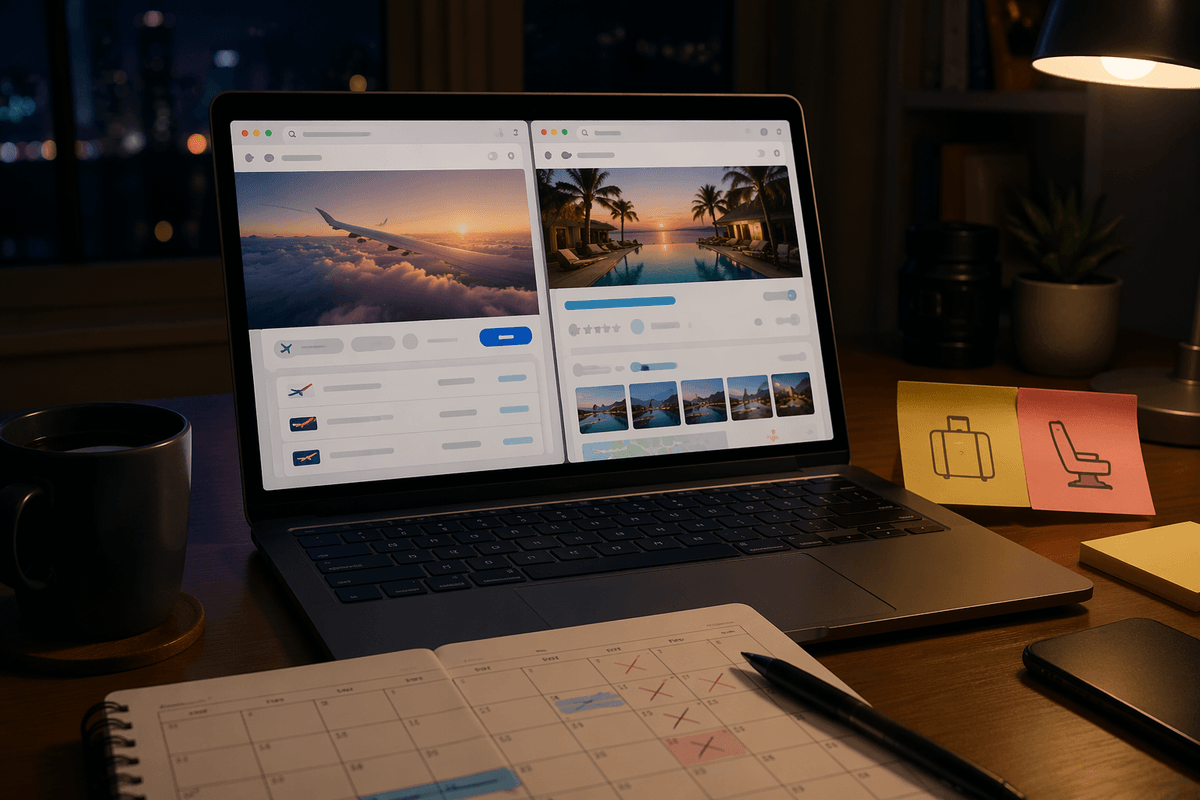
At 21:06 I clicked through to pay and the “€89” direct quietly became €148 once I added a cabin bag and a seat that wasn’t the last row. Then the checkout tried to upsell “priority” like it was optional, even though it was basically my carry-on fee in a nicer jacket. I backed out, copied the exact same dates into a second tab, and realized the cheapest fare only stayed cheap if I traveled like a minimalist.
For a 2–3 week planning window, the best move is to price your real setup from the start: underseat-only versus cabin bag, and whether you’ll pay for a sane seat to protect your first Porto workday. Low-cost can win if you’re flexible by a day and don’t mind WMI’s ground transfer; WAW often wins once you value sleep and predictable timing. I also compare totals in one table: flight price + bag + seat + airport transfer, because the “cheaper” airport can burn the savings in a single taxi when your return lands late.
When nonstops are patchy, I set two alerts: one for WAW–OPO and one for WMI–OPO, same week range, then I only react when the fare drop survives baggage math. Waiting can help, but with limited direct seats it can also punish you fast—so if you see a workable departure time and a total price you’d accept twice, that’s usually my cue to book and stop refreshing.
My picks for one week in Porto
At 10:12 on my first full morning, I opened the laptop at a café near Aliados and realized Porto is a “stairs city” in a way maps don’t confess. The walk down toward Ribeira felt quick; the climb back up to São Bento took twice the time and a water stop. That timing difference matters when you’re trying to squeeze a work block between lunch and sunset.
For a one-week rhythm that works for a solo remote worker, I’d split days by effort: two “heavy legs,” two “light drift,” and the rest flexible. Heavy: a riverside loop (Ribeira → Dom Luís I upper deck → Gaia cellars) and a hill day (Sé + viewpoints + a slow wander through Cedofeita). Light: Foz do Douro for wind-down walks when it’s hot, and a market morning around Bolhão when you want good food without a big transit plan. Crowds peak hard at Livraria Lello and popular miradouros; timed tickets help, but they also lock your afternoon more than you expect.
Trade-off-wise, I’d book only two things in advance: one cellar tasting at a specific hour and one “must” ticket (Lello or a concert). Everything else stays weather-proof: if Atlantic fog rolls in, swap to churches, tiles, and long lunches; if it’s bright, push the river and bridges. If your return flight is early, keep the last night flat (Baixa), not up in the hills—future-you will thank you at 05:30.