Why Iceland works for adventurous families
Our first real hesitation wasn’t the cost or even the cold—it was the map. Iceland looks small until you start converting “just over there” into drive times with a backseat that needs snack breaks and bathroom stops. The good news is that Iceland’s biggest payoffs (waterfalls, black-sand beaches, geothermal pools) often sit close to paved roads, so you can get the “big nature” feeling without committing to risky hikes or all-day treks.
What makes it work for adventurous families is the sheer density of stops: you can stack two or three headline-worthy sights into a morning, then still have the afternoon for a warm soak or a slow walk. That said, the same density brings crowds—especially on the Golden Circle—so timing matters more than heroically adding more miles.
Weather is the real boss, and it’s the reason Iceland rewards flexible planning. A windy, rainy day can turn a “short viewpoint stop” into a miserable car-door wrestling match, but it also pushes you toward easy wins like geothermal pools, visitor centers, and short boardwalk trails that keep the day feeling like an adventure instead of a slog.
Best family adventure bases: Golden Circle, South Coast
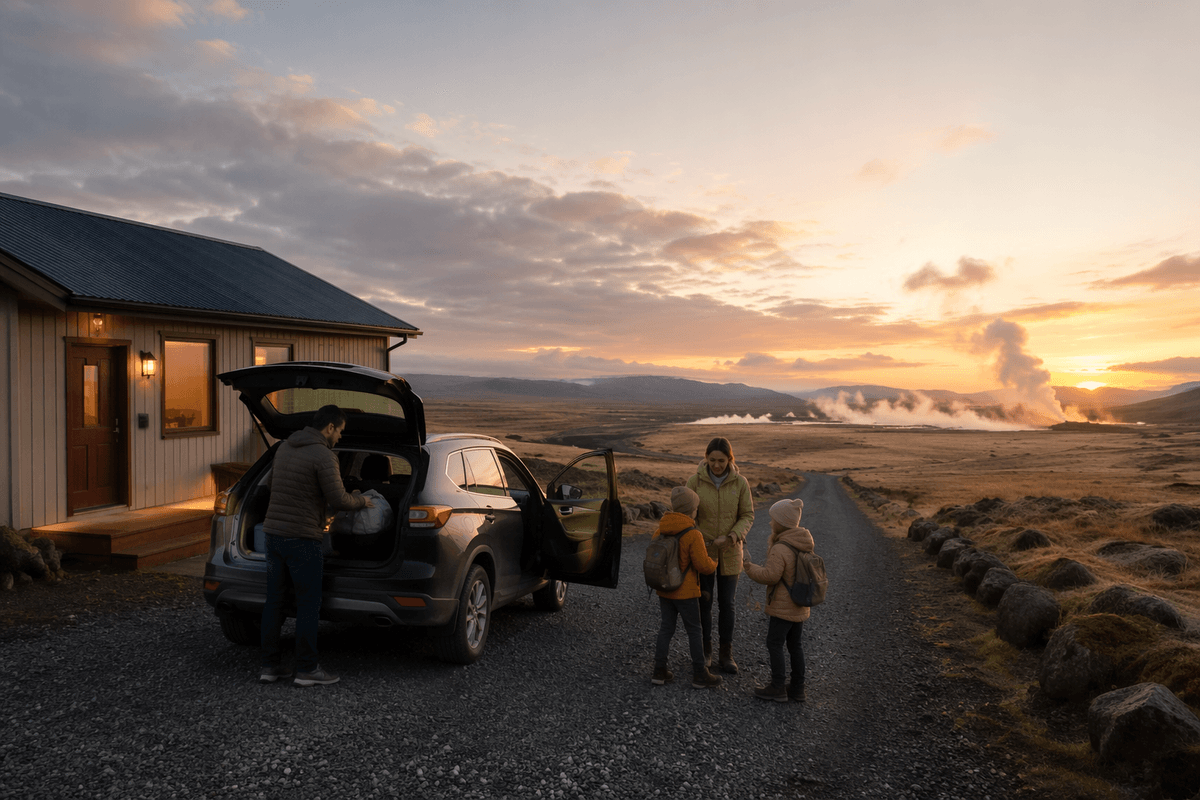
The first fork in the road is where you sleep, because “we’ll just day-trip it” sounds great until you’re driving back in the dark with two overtired kids and one last gas-station hot dog. For a 7-day, mid-range family trip, I’d treat the Golden Circle and the South Coast as two separate bases you stitch together, rather than trying to radiate from Reykjavík every day.
The Golden Circle works when you want short hops, predictable services, and an easy reset button if the weather turns—think staying around Selfoss, Hveragerði, or Flúðir so you can hit Þingvellir and geysers early, then be back for downtime without committing to another hour of driving. The catch is crowds: you’ll feel the difference between arriving before 10 a.m. versus mid-day, especially at the most famous stops.
The South Coast base (Vík if you like compact and scenic; Hvolsvöllur/Hella if you want cheaper and more flexible) is where waterfalls and beaches start stacking up fast—but only if you accept slower pacing. Wind can make beach stops feel like a battle, and the “quick” detours add up, so plan one anchor sight per half-day and keep a warm-pool option in your pocket for the inevitable weather pivot.
Kid-friendly outdoor thrills: waterfalls, beaches, easy hikes
I learned quickly that the best “thrills” with school-age kids in Iceland aren’t the biggest hikes—they’re the places where you can step out of the car, feel the scale immediately, and get back into warmth before anyone’s gloves are soaked. Waterfalls are the easiest win: Seljalandsfoss is unforgettable, but the behind-the-falls loop is only fun if everyone has real rain gear and you’re okay with slippery footing; Skógafoss feels safer underfoot and still delivers that loud, misty wow-factor. If time is tight, pick one major waterfall stop per half-day, because the short walks plus photo breaks can easily stretch longer than you expect.
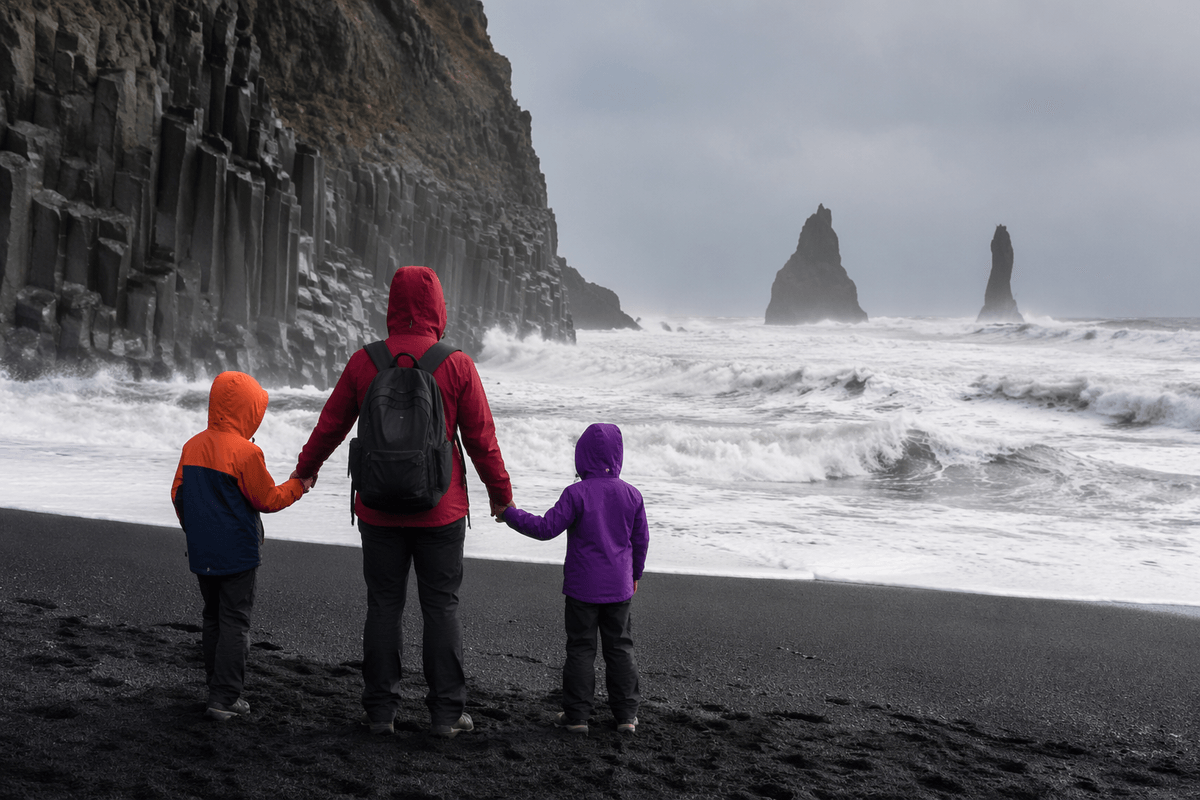
Beaches are the other “big nature” hit, with a bigger weather penalty. Reynisfjara near Vík looks like a quick stop on paper, but wind and rogue-wave warnings make it a hands-on parenting moment—great for a 20–30 minute visit, not a relaxed wander. When conditions cooperate, pair it with an easy leg-stretcher like the Dyrhólaey viewpoints (short walks, huge views), and skip anything that requires scrambling near edges.
For easy hikes that feel like exploration without committing to a rescue-level outing, look for marked paths with clear turnarounds—gorge walks, lava fields, and short crater loops tend to work well. The constraint is daylight and mood: plan these right after a snack or early dinner, not as a “one more stop” at the end of a long drive.
Wildlife and nature highlights without long drives
The moment we started eyeing “one quick wildlife detour” on the map, I had to pull us back to reality: animals don’t keep a timetable, and kids don’t love sitting still for long stretches waiting for a maybe. For a 7-day trip based on the Golden Circle + South Coast, the most reliable nature “wins” without brutal drives are the close-in bird cliffs and easy-to-reach coastal viewpoints—places where you can try for puffins or seabirds, but still leave happy if you only get dramatic wind and ocean spray.
On the South Coast, Dyrhólaey is the cleanest example of efficient reward: short walks, big views, and (in season) a decent chance at seeing birds without needing a boat. The limitation is that wind can make it feel downright unfriendly, especially with car doors and smaller kids—if gusts are strong, we treated it like a 10-minute hop rather than forcing a full loop. Around the Golden Circle, Þingvellir’s lake-edge views and rift scenery scratch the “wild Iceland” itch with stroller-level paths, but you’ll get more out of it early or late when you’re not navigating crowds like a theme-park queue.
If you’re tempted by whales, that’s where the math changes: tours can be fantastic, but they’re a bigger time-and-money commitment, and sea conditions can turn it into a queasy, low-visibility ride. For families trying to keep driving modest, I’d only book a whale trip if the forecast looks calm—and keep a land-based backup (short waterfall stop or a warm pool) so the day still feels like a win.
Geothermal fun: lagoons, hot springs, steamy valleys
The night we debated “pool now or later,” the kids were already salty-tired from wind and spray—exactly when geothermal time stops being a luxury and becomes the reset button. The famous lagoons are the easiest, lowest-stress version of this: you pay more, but you get lockers, towels, clear rules, and a setup that works even when the weather is ugly. With school-age kids, that predictability matters; what doesn’t work as well is trying to squeeze a lagoon visit into the middle of a driving day, because wet hair + car seats + a cold parking lot can sour the mood fast.
Hot springs outside the big-ticket spots can feel more “Icelandic,” but they’re less consistent for families—some have changing facilities that are basic, some are crowded at peak times, and a few depend on staying on marked paths around hot ground. If you want the steamy-valley experience, places like Hveragerði’s Reykjadalur deliver, but only if everyone’s up for a longer walk and you’re watching conditions; after heavy rain or in cold wind, the same trail can turn from fun to a slog.
My rule after a couple of near-meltdowns: plan geothermal late afternoon as a reward, not as a filler. It smooths over weather pivots, and it buys you a calmer dinner—even if you’ve had to skip a viewpoint or two.
Practicalities: weather gear, safety, food, naps
Our biggest packing debate wasn’t “how cold will it be,” but “how wet will it be,” because wet is what ends the day early. For school-age kids, a real waterproof shell (not just a puffy) plus rain pants changes everything: waterfall mist, sideways drizzle, and kneeling on damp boardwalks stop being a crisis. The friction is that bulky layers are annoying in the car—so we kept a small “door kit” up front (hats, thin gloves, a spare set of socks) and accepted that nobody stays perfectly dry if you’re hopping in and out all day.
Safety is mostly about not letting the scenery rush your judgment. Beaches like Reynisfjara are the obvious one—hold hands, keep distance, don’t negotiate with “just one more photo”—but the sneakier hazards are parking lots in high wind and slick paths near falls. If gusts are strong enough that kids have to lean into them, we treated viewpoints as quick exits, not strolls. Driving is the other constraint: Iceland’s “short” distances feel longer with weather, sheep, and narrow shoulders, so we planned fewer stops and arrived less frazzled.
Food and naps worked best when we stopped pretending we’d “grab something later.” Gas-station hot dogs are genuinely useful, but they don’t prevent a 4 p.m. crash, so we carried picnic basics and scheduled one predictable sit-down meal every day. For naps, we didn’t fight the car-seat snooze—just made sure it happened on a non-scenic stretch, because nothing is more frustrating than reaching the highlight right as both kids finally fall asleep.
How to pick your ‘just-right’ Iceland adventure
The last night, we stared at three tabs—Snæfellsnes, “secret” hot springs, and yet another waterfall pin—and realized our best plan was to decide what we were willing to feel: more driving, more crowds, or more cost. For a 7-day family loop that won’t grind everyone down, start by committing to two bases (Golden Circle area + South Coast) and then pick one “reach” day only if the forecast looks stable. Snæfellsnes is doable, but it’s the first place that turns a scenic day into a long day, especially if you’re also trying to keep bedtime sane.
Then build your days like a menu: one anchor sight (major waterfall or black-sand beach), one short add-on (viewpoint, easy trail), and one warm reset (pool or lagoon) placed late, not mid-drive. If you’re torn between a tour and DIY, tours win on ease when wind and timing are unpredictable; DIY wins when you want snack breaks and fast exits without losing money on missed departures.
Finally, keep one indoor-ish backup per region—visitor centers, geothermal pools, or short boardwalk sites—because the week almost always includes a day where “toughing it out” costs more than it’s worth.