Why Sevilla feels different at first glance
The first thing that hit me in Sevilla wasn’t a single monument—it was the way the city asks you to slow down, whether you planned to or not. You can land with an efficient checklist mentality and still find yourself recalibrating within an hour: narrow lanes that shade you and then suddenly spill you into a bright plaza, the smell of orange blossoms (or just warm citrus leaves) riding on air that can feel heavy by late morning, and a rhythm that makes “I’ll just power through” a questionable strategy.
That difference matters for a 3–4 day, mostly DIY trip because Sevilla rewards timing more than distance. A 20-minute walk can be pleasant at 9:00 a.m. and feel like a penalty at 2:00 p.m., and many of the most satisfying moments happen when you accept the city’s natural pauses—long lunches, slower afternoons, later dinners. The limitation is obvious: if you try to keep a Northern Europe pace, you’ll burn energy exactly when queues and ticket lines are longest.
So the early decision isn’t “what to see first,” it’s “what kind of day can I actually sustain?” If you treat mornings as your high-output window (big sights, pre-booked entries) and evenings as your wandering-and-tapas time, Sevilla feels effortless. If you don’t, it can feel like a beautiful city that’s constantly saying “not now.”
Choosing when to go: heat, crowds, festivals
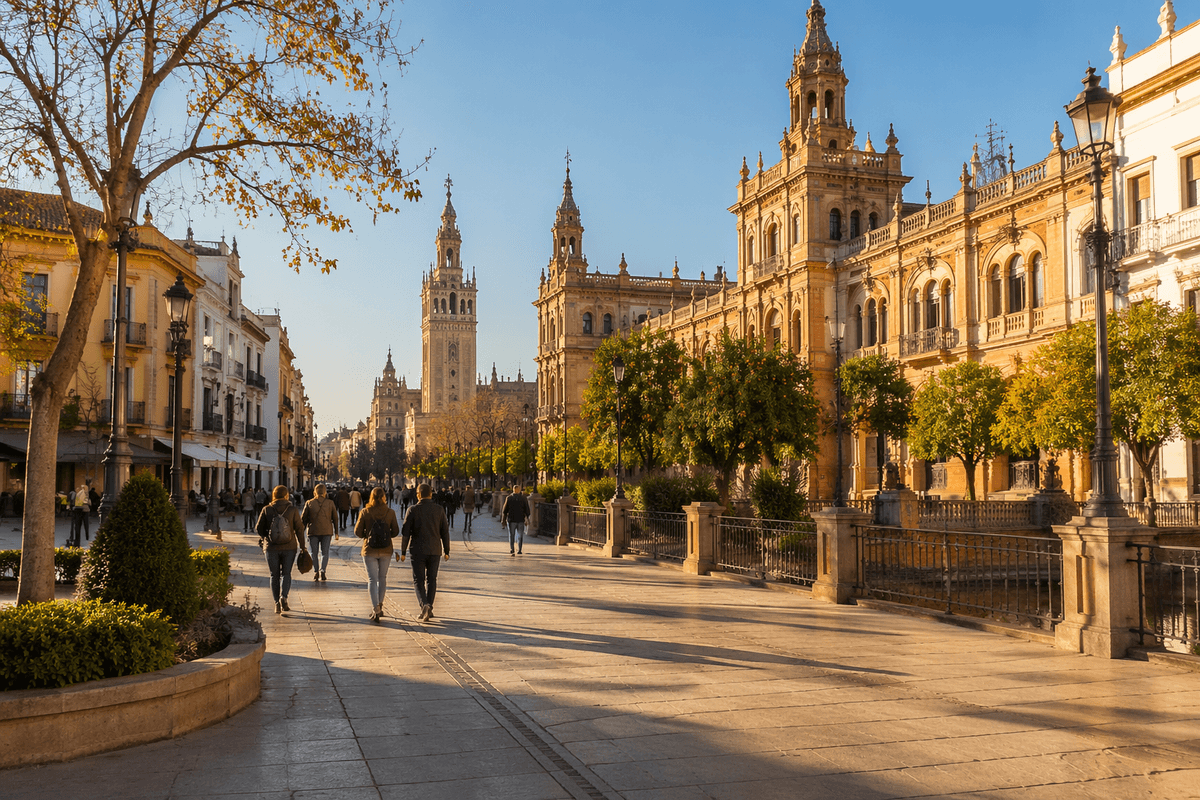
I almost booked Sevilla for July on the logic of “more daylight, more time,” then I looked at the forecast history and pictured myself queueing for the Cathedral in full sun. If you’re a first-timer with only 3–4 days, the best “when” question is really: do you want to spend your limited energy sightseeing, or managing heat? Late October through April tends to feel forgiving for long walks and back-to-back monuments; the same itinerary in summer can turn into a two-activity day unless you’re genuinely fine with early starts and midday shutdowns.
Crowds are the other variable you can’t out-will. Shoulder-season weekends can be deceptively busy, and festivals compress the city further—amazing atmosphere, but also higher prices, booked-out rooms, and a sense that you’re navigating around the party. Semana Santa and Feria de Abril are unforgettable if you’re curious and flexible, but they’re not the moment for a tightly scheduled “hit every must-see” plan.
Whatever month you choose, build your days like a local would: book the big-ticket entries for the first slot of the day, leave the 2:00–6:00 window intentionally light (museum, long lunch, siesta), and treat nights as your second wind for Triana walks, tapas, and flamenco—when the city finally feels like it’s working with you, not against you.
The essential trio: Alcázar, Cathedral, Santa Cruz
The night before my Alcázar visit, I had that annoying moment of doubt: did I really need a timed ticket for “a palace,” or could I just show up and wing it? In Sevilla, winging it is where time quietly disappears—especially with the Alcázar and the Cathedral—so I’d treat pre-booking as non-negotiable if you only have 3–4 days. Put the Alcázar in your first-morning slot when your patience is highest; the gardens are at their best before the heat turns wandering into a slow slog, and you’ll actually notice the tilework instead of scanning for shade.
The Cathedral and Giralda climb are the other piece to place early, but with a different constraint: the tower is physically simple and mentally draining if you do it at midday. If you’re choosing, do Giralda first, then the Cathedral interior—your legs will thank you, and you won’t feel rushed by the growing crowd flow behind you. Santa Cruz is what stitches the two monuments together, but it’s not an “activity” so much as a pacing tool: use it for a late-morning drift (narrow streets, quick drink, reset), not as something you “do” at 3:00 p.m. when everything feels hotter and more crowded than it needs to.
If you’re tempted to stack all three back-to-back, it can work, but it’s a high-output morning that eats your attention. I preferred separating them across two mornings so Santa Cruz stayed charming instead of feeling like a corridor between ticket checks.
Eating and drinking like a local, not a tourist
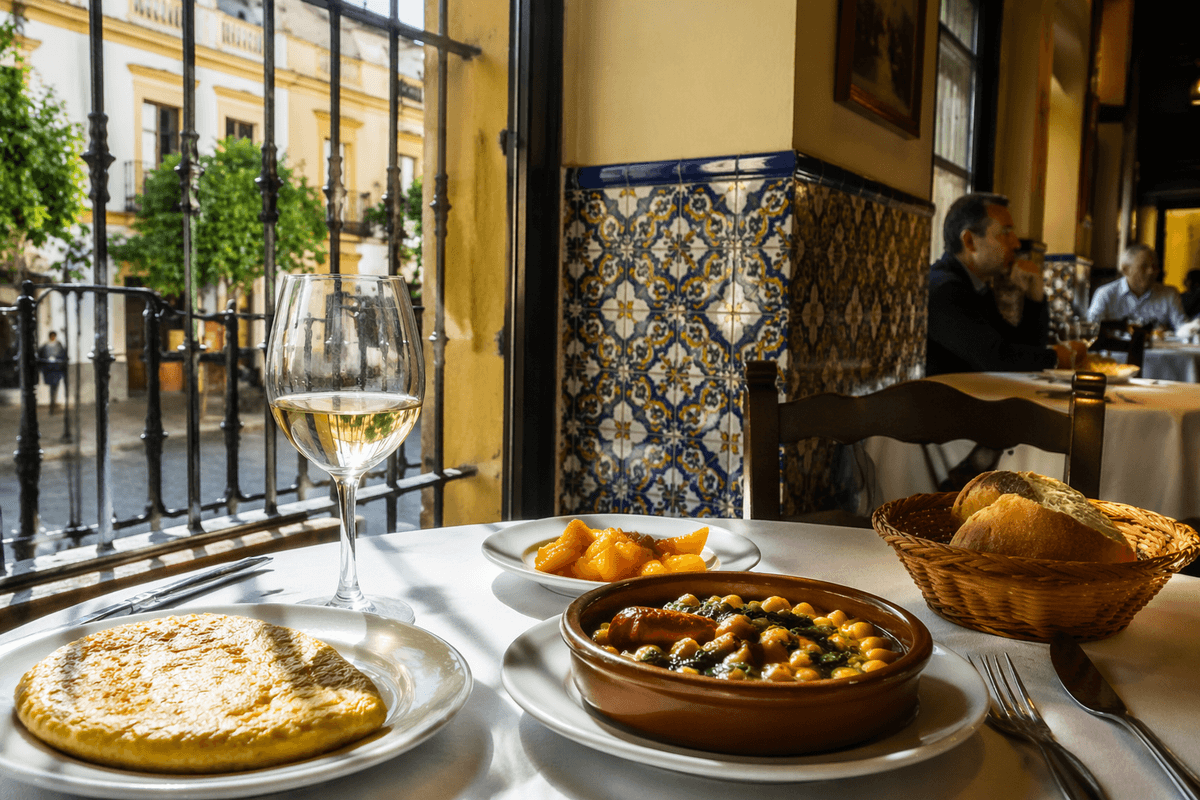
My first tapas “mistake” in Sevilla was trying to solve dinner like a normal sit-down meal: pick one place, commit, order big. It worked, technically, but it felt oddly flat—and expensive for what it was—because the city’s food rhythm is built around motion. A more local-feeling night is two or three small stops, standing at the bar when you can, and ordering with restraint at first. The constraint is obvious when you’re tired: hopping sounds fun until you’re overheated or your feet are done, so I’d plan on a short radius (especially if you’re staying near the center) and call it early if the second place is already “the one.”
Timing matters more than the “perfect” tapas list. If you sit down starving at 7:30 p.m., you’ll end up in the tourist lane because the room that looks lively will also be the one serving full menus early. I had better luck with a late snack after your afternoon reset, then a proper tapas crawl closer to 9:00–10:30 p.m. when locals actually show up. It’s not always convenient—especially if you’re jet-lagged—but it keeps you from eating your best meal in the quiet, in-between hours.
When you’re scanning menus, steer toward places where the board is short, seasonal, and a little opinionated rather than offering every Spanish greatest hit at once. If you want one “splurge” moment on a mid-range budget, make it lunch: set-menu style places can feel like a deal compared to dinner pricing, and you’re not competing with the nighttime rush. Just don’t underestimate the post-lunch slowdown—if you over-order at 2:30, your evening plans (including flamenco) will feel heavier than they should.
Beyond the postcards: Triana, river, hidden corners
I crossed the Puente de Isabel II into Triana thinking it would be a quick “tick the neighborhood” loop, and immediately ran into the practical problem: it’s hard to keep moving when every street corner is trying to slow you down. Triana works best as an evening assignment, not a midday march—later light on the river, more energy on the sidewalks, and less of that sticky, heat-amplifying feeling you get when you’re away from the tight shade of the center. If you go too early, it can feel oddly quiet; if you go too late on a weekend, it can tip into shoulder-to-shoulder around the busiest bars.
The river walk is your low-effort reset button, but it’s only “easy” if you time it right. I liked doing a lazy loop: along the Guadalquivir on the central side for the views back to the old skyline, then crossing over and returning through Triana with one planned stop (a drink, a small plate) so you don’t end up impulse-eating wherever has a menu in English. The limitation: benches and shade aren’t evenly spaced, so if you’re already heat-fatigued, keep the loop short and give yourself permission to turn it into a one-bridge out-and-back.
For hidden corners, I’d prioritize small, shaded plazas and church-adjacent streets over “another viewpoint.” They’re less Instagram-obvious, but they’re where Sevilla feels breathable—especially in that 2:00–6:00 window when big sights are a bad bargain for your energy. If you’re deciding between a day trip and deeper Sevilla, this is the argument for staying: Triana plus a river hour can feel like a whole new city without the logistics tax.
Leaving Sevilla: what you’ll remember most
The last morning I tried to squeeze in “one more thing” before checkout, and it was exactly when Sevilla pushed back: the sun was already sharp, my bag felt heavier by the minute, and I realized I was trading a calm goodbye for a rushed checklist. What stuck instead was the simple rhythm that had worked all week—early effort, midday retreat, late wandering—and how quickly the city feels less forgiving when you ignore it.
If you’re deciding what to prioritize in 3–4 days, here’s the honest takeaway: booking the Alcázar and Cathedral early buys you freedom later, but adding a day trip often costs you the evenings that make Sevilla feel most “alive.” I remembered the slow crossings to Triana, the second round that wasn’t planned, and the way Santa Cruz changes once the groups thin out—not the extra museum I nearly forced in.
On your final night, I’d choose one: a proper flamenco show or a loose tapas crawl, not both. Doing both is possible, but it’s the fastest way to turn your best evening into a timekeeping exercise—and Sevilla is at its best when you stop negotiating with the clock.