Why “rest more” often doesn’t feel like relief
It’s often the second day of “taking it easy” that feels oddly worse. You stand up from the couch or the desk and everything has that thick, protective stiffness—like your body is bracing before you even move. People sometimes read that as proof they’re “damaging something,” when it may simply be that tissues and your nervous system got less exposure to normal, low-level movement.
Rest can calm things down in the short term, but it also lowers your day-to-day tolerance if it stretches on. Less walking, fewer position changes, and fewer gentle loads can mean less circulation, more joint “compression time,” and a sharper alarm response the next time you bend, reach, or climb stairs. One quiet day helps, three can make a simple errand feel like a flare-up.
When you start noticing which kind of rest helps—short pauses, better sleep, fewer repeats—versus which kind tends to backfire—long stillness, skipped meals, stressy evenings—you get earlier clues. The goal isn’t to avoid rest; it’s to recognize when rest turns into deconditioning and guarding.
Micro-movement habits that reduce guarding and stiffness
It usually shows up in small moments: you reach for a mug and notice your shoulder “catches,” or you turn your head and it feels like the muscles are already negotiating. Many people assume they need a big stretch session to “fix it,” but the body often responds faster to tiny position changes repeated throughout the day.
Micro-movements work because they interrupt long stretches of bracing. When you’ve been still, your system tends to choose stability first—more co-contraction, less glide—especially if you’ve had a few sensitive days. A 10–20 second reset (standing up once, rolling the shoulders, opening and closing the hands, a slow ankle pump, a gentle neck scan) can be enough to remind the joints and tissues that movement is still safe.
Sometimes one reset helps immediately, other days it takes three or four. If your stiffness reliably spikes after calls, driving, or scrolling, sprinkling these “tiny reps” before you feel stuck often reduces the guarding that would otherwise build up.
Pacing your day without the boom-and-bust cycle
You finish an errand run feeling almost normal, so you tack on “just one more thing.” Then that night—or the next morning—your back, neck, or knees feel like they’re collecting interest. It can be confusing because the flare-up doesn’t happen during the activity, so it’s easy to blame a single moment rather than the total load of the day.
The boom-and-bust pattern often looks like this: several lower-demand days (more sitting, fewer steps, lighter lifting) lower your tolerance a bit, and then a “catch-up” day stacks walking, carrying, driving, and screen time without enough breaks. Your system doesn’t only react to intensity; it reacts to duration and repetition, especially when you stay in one posture too long. By the time you notice heat, swelling, deep ache, or that tight “armoring” feeling, you’re usually seeing the late signal.
Pacing is mostly about catching the early signs—subtle fatigue, shorter temper, a need to brace when you stand—and inserting small recovery windows before things spike. The life doesn’t pause for perfect timing. But when you start pairing high-demand tasks with lower-demand ones, the day often feels less like a gamble.
Comfort-friendly strength habits that feel less intimidating
Halfway through unloading the dishwasher, you realize you’ve been holding your breath and “locking” your knees like you’re preparing for impact. That’s usually the moment people decide strength work is off-limits—because even a light chore can feel like a workout on a sensitive day. But the problem often isn’t strength itself; it’s how suddenly the load arrives, and how much your body tries to stiffen to feel safe.
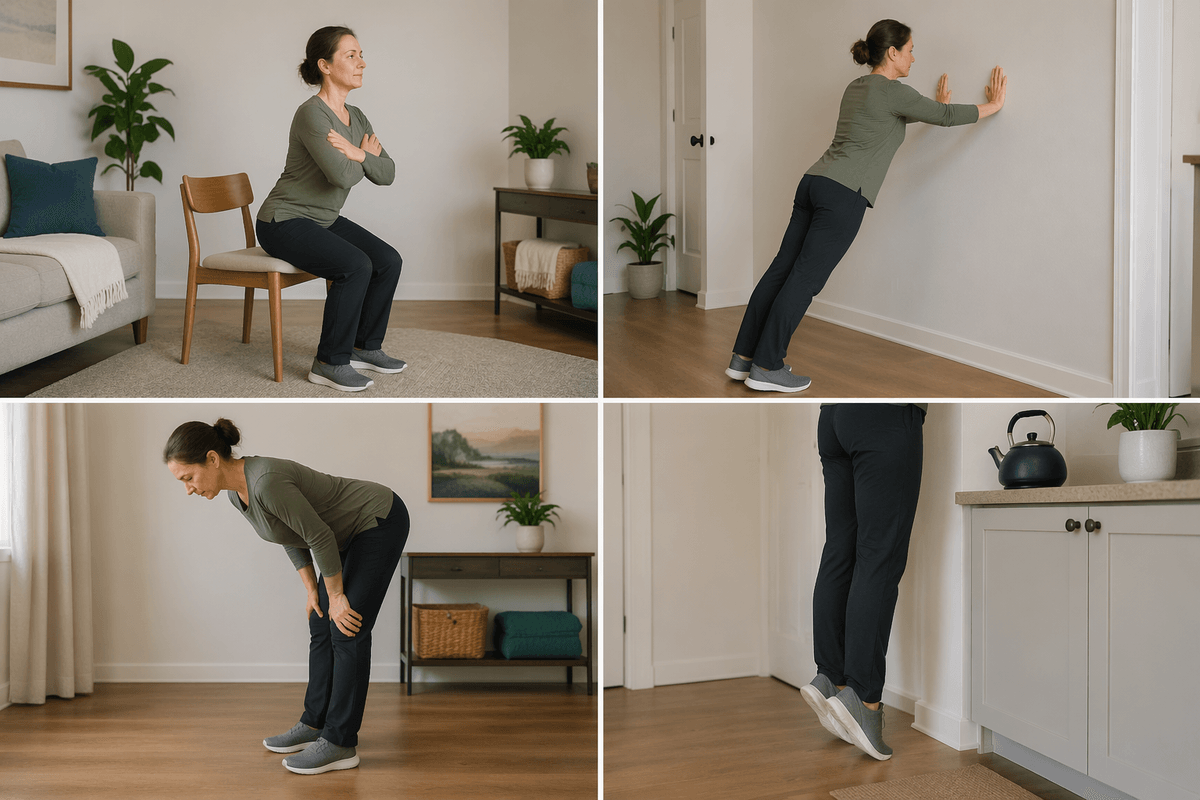
Comfort-friendly strength tends to look almost boring: short, repeatable exposures that don’t require a big mental ramp-up. Think of movements that mimic real life—sit-to-stand from a chair, a gentle hip hinge while your hands slide down your thighs, wall push-ups, or slow heel raises while you wait for the kettle. When these are done at an effort that feels “easy-to-moderate,” they can build tolerance without triggering the full guarding response that shows up when you go too heavy, too deep, or too long.
You might feel fine during the set and still wake up with that extra thickness the next morning. Over time, the useful pattern to watch is whether your “next-day” stiffness settles faster and your usual tasks require less bracing—not whether you can chase a burn in the moment.
Stretching, foam rolling, and the surprise backlash
You finally get a few quiet minutes, drop to the floor, and do the stretch you “always do.” For a moment it feels like a release—then you stand up and everything feels more cranky, almost protective. Foam rolling can do the same: tender spot, deep pressure, a temporary loosening… and then a weird, buzzy soreness that wasn’t there before.
That surprise backlash often isn’t because stretching or rolling is “bad.” It’s that intensity matters. Long holds, aggressive pulling, or heavy pressure can act like a strong input to a system that’s already on alert, and your body may answer by tightening up later to create stability. The reaction may show up that evening or the next morning, so it gets blamed on whatever you did last.
In practice, the pattern to watch is dose and response—how long, how hard, and how you feel over the next 24 hours. Relief that comes with a rebound is still information.
Sleep, stress, and the hidden volume knob on pain

It’s often the night you “did everything right” that your body won’t settle. You shift positions, the pillow feels wrong, and the next morning your neck or low back has that overprotected, slightly inflamed feeling—like your system spent all night on light sleep and high alert. People sometimes assume it means they “slept wrong,” when it may be more about recovery being shallow than about a single posture.
Sleep and stress can act like a volume knob on sensitivity. When you’re stressed, breathing stays a bit higher, shoulders creep up, and muscles spend more hours in low-grade contraction. Pair that with fragmented sleep, and your usual aches may feel louder: less tolerance for sitting, more stiffness on first steps, more “touchy” joints during normal chores.
One bad night might not matter—three in a row can make a minor workload feel huge. Tracking “sleep quality + stress load” next to pain often explains why the same routine feels fine one week and reactive the next.
Building a personal comfort toolkit you actually reuse
It’s usually in the middle of a normal day that you realize you don’t have “a plan,” you have a handful of things you tried once. The heat pack is somewhere in a closet, the stretching routine feels like too much effort, and the only strategy that’s always available is bracing and pushing through. On a sensitive week, that gap matters—because the helpful choice is often the easiest one to access in the moment.
A comfort toolkit that gets reused tends to be small, specific, and tied to early signals. If your first hint is hand tightness, the tool might be 20 seconds of opening/closing and a quick shake-out before you grip again. If it’s low-back thickening after sitting, it might be one lap around the room and two slow hinges before you load the spine. The “why” is simple: you’re lowering cumulative input before the alarm system needs to shout.
But when you keep two or three “low-friction” options for flare-y days and two or three for steadier days, you stop treating comfort like a mystery and start treating it like feedback.