Vilnius–Klaipėda isn’t one ride
I was standing by Vilnius station with a rental gravel bike, zooming in and out on a GPX line that looked clean on my phone but messy at street level. The “Vilnius–Klaipėda” idea read like one 300-ish km arrow, yet the first ten minutes already had me choosing between a busier arterial and a slower riverside detour. That hesitation matters, because the wrong first turn sets the tone for the whole week.
In practice, Vilnius→Klaipėda is a chain of different rides stitched together: an urban exit, a calmer middle, and a coastal approach that can feel like it’s leaning into wind. What works for a mid-budget solo rider is treating it as two primary decisions (Vilnius→Kaunas, then Kaunas→Klaipėda) plus a third, quieter one: where you’ll stop when weather or fatigue trims your ambition. A “fast” paved line can save an hour but costs you attention and shoulder comfort; a gravel-leaning line can be peaceful, yet it’s slower after rain and pushes you toward earlier starts to hit lodging before evening check-ins get awkward.
Plan daily chunks you can actually repeat—think 60–90 km rather than heroic spikes—then mark bailout points with train stations and larger towns for groceries and basic fixes. If you’re undecided, pick the version that gives you more exits, not fewer; you can always add a scenic loop, but it’s hard to subtract traffic once you’re committed.
Pick your pace and season
On day two I looked up from my coffee at 7:18 a.m. and did the quiet math: if I didn’t roll by eight, I’d be arriving after six, right when the smaller guesthouses start feeling “closed unless you called.” A 95 km day on paper is fine; a 95 km day with photo stops, a supermarket detour, and one muddy stretch that forces slow steering is a different budget. That’s when “pace” stopped meaning fitness and started meaning how much slack I was carrying.
If you want a 6–8 day point-to-point ride without daily stress, 60–85 km is the repeatable range; it leaves time to reroute around a loud road, fix a tire, or wait out a squall. Pushing 95–120 km can work if you’re staying in larger towns with late check-in and you’re happy to trade scenery for speed when needed; it’s the wrong plan if you need quiet lodging options and dislike arriving hungry and half-chilled. Gravel-heavy days feel calmer than highway-adjacent pavement, but they’re the first to collapse after rain—your average speed drops, and your “easy” afternoon becomes a grind.
Season changes the whole deal. High summer buys you long light and warm starts, yet the coast can still hand you a headwind that turns a flat 70 km into a morale test; spring and autumn are prettier and quieter, but wet days make unpaved connectors sticky and slow. If you’re wind-averse or hate riding damp, aim for a plan with shorter stages and more towns—then decide each morning whether you’re earning a detour or taking the direct line.
Choose your Vilnius to Kaunas line
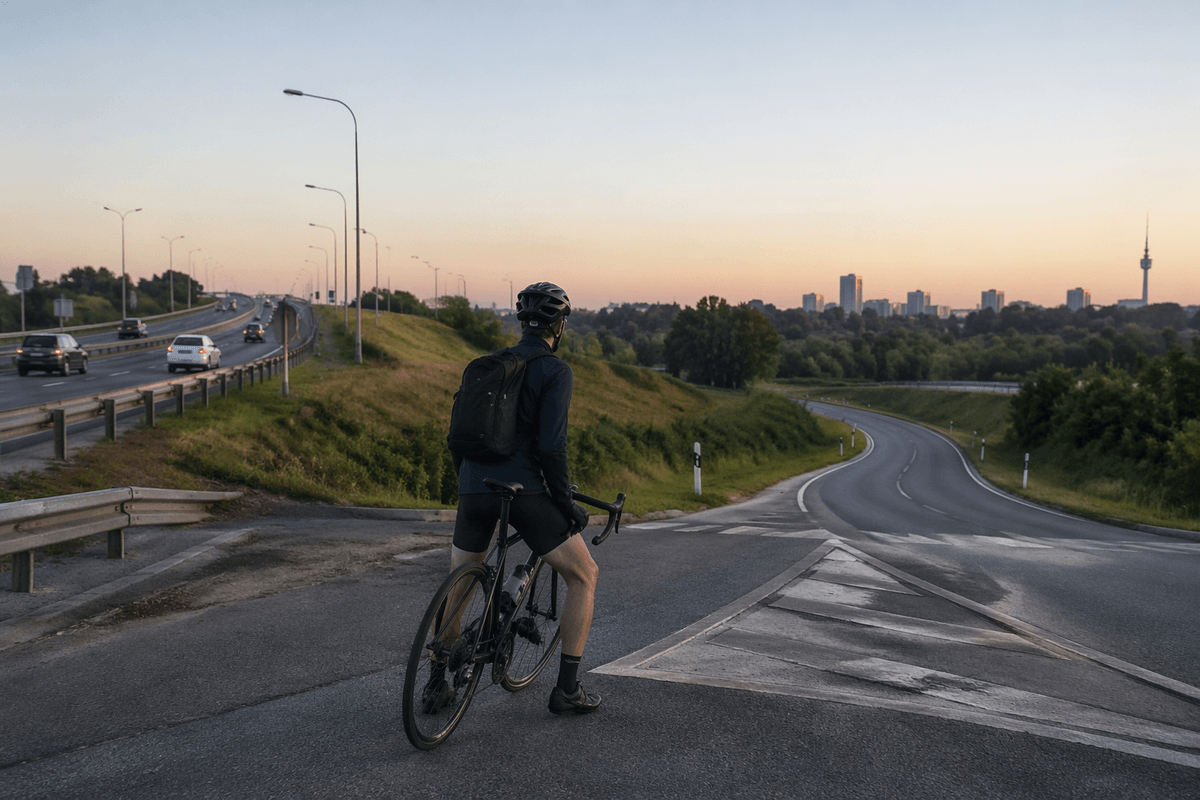
At the edge of Vilnius, my GPX line insisted I should “just follow the most direct road,” and the first on-ramp-looking junction made me stop with one foot down. The map saw a clean corridor to Kaunas; the roadside felt like a commitment to noise and fast traffic. That little pause is useful: Vilnius→Kaunas isn’t about finding the shortest line, it’s about choosing what kind of attention you’re willing to spend for 4–6 hours.
If you want fast and predictable surfaces, you can stitch together mostly-paved secondary roads that roughly parallel the main highway without actually riding it. Expect something like 105–120 km depending on detours, and plan one “inefficiency” stop (Elektrėnai or Kaišiadorys area) because services are easier there than on quiet connectors. Even calm paved roads have bursts of traffic near towns, and headwinds feel sharper when you’re exposed.
If you’re renting a gravel bike because you dislike close passes, lean toward a Trakai-side exit and then quieter lanes with short gravel links—slower, but calmer. After rain, those same connectors can turn into the day’s limiter, nudging you toward an earlier roll-out or a shorter target like Žiežmariai. Keep a bailout in your pocket: Vilnius↔Kaunas rail can rescue a bad-weather morning (some trains take bikes with an add-on; check LTG Link before you lock the plan).
Decide how you reach Klaipėda
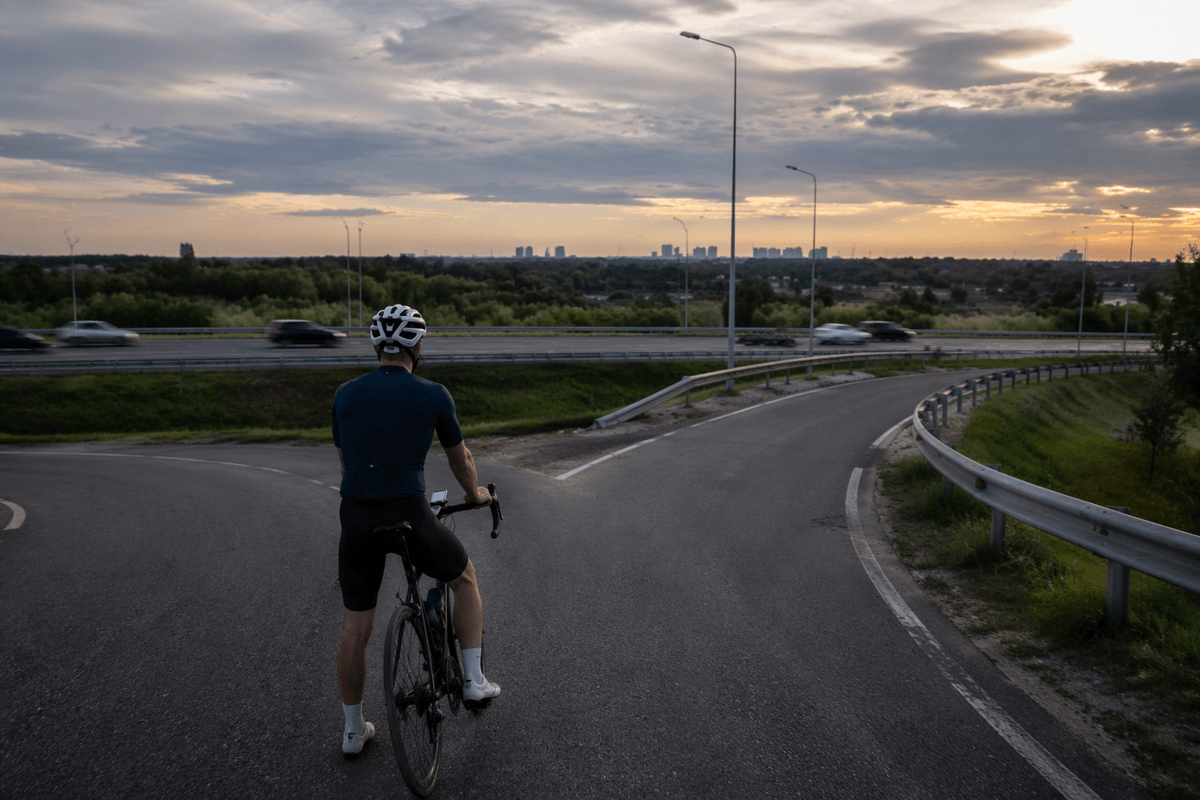
Outside Kaunas, I hesitated at a riverside turnoff while a low cloudbank slid in from the west, the kind that makes you question any “straight shot” plan. My GPX wanted a clean line toward Šiauliai; my eyes wanted shelter and a surface that wouldn’t turn sticky if the rain actually landed. That small moment is basically the Kaunas→Klaipėda decision in miniature: speed on open pavement versus steadier comfort on quieter, sometimes slower roads.
The fastest-feeling approach is a mostly paved inland line via bigger towns (often Kaunas→Kėdainiai/Šiauliai direction, then on toward the coast). It’s efficient for distance math and resupply, and it suits riders who don’t mind periodic traffic pulses and wider, wind-exposed stretches. Even “fine” roads start to feel long when you’re riding solo and getting passed all afternoon, and headwinds on open farmland can erase the time you thought you saved.
If you’re traffic-averse, I’d bias westward in smaller bites with a river-and-backroads mentality (Kaunas→Jurbarkas area is a common calm anchor), then aim for a second overnight before you commit to the coastal push. It adds detours, but it buys you more places to stop early when rain slows gravel connectors or you simply don’t want a late check-in. Keep one bailout card: LTG Link trains can turn a rough-weather morning into an afternoon roll into Klaipėda, which is sometimes the smartest “route choice” you’ll make.
What I’d do for a first ride
At 6:52 a.m. in Kaunas, I’d be staring at a radar blob on my phone while my chain ticked dry from yesterday’s grit, trying to decide if I was rolling in ten minutes or hiding under the hostel awning. That’s the moment I’d commit to a “first-ride” plan: not the prettiest line, not the fastest one, but the one that still works when you start an hour late. If I can’t explain the day in one sentence, it’s probably too clever for day three legs.
I’d set this up as three repeatable days plus one flex day: Vilnius→Kaunas around 105–120 km (mostly paved connectors, with one easy services stop), then Kaunas→Jurbarkas-ish 70–85 km, then Jurbarkas area→somewhere near the coast 70–90 km, and leave the final push into Klaipėda as a shorter day unless the wind is kind. You’ll add a little mileage versus a straighter inland line, but you’ll spend less attention budget on fast passes and get more “stop early” towns when rain turns any gravel link into a time sink.
Logistics-wise, I’d book the first two nights ahead (Vilnius exit day and the first westbound overnight), then keep the rest semi-loose with a hard rule: I want a grocery by 5 p.m. and a roof by 7. If the weather flips, I’d treat LTG Link as a tool, not a failure—ride the calm sections, train the miserable ones. If you’re choosing between an extra 15 km detour and an hour of loud road, I’d take the detour and arrive with enough patience left to enjoy Klaipėda.