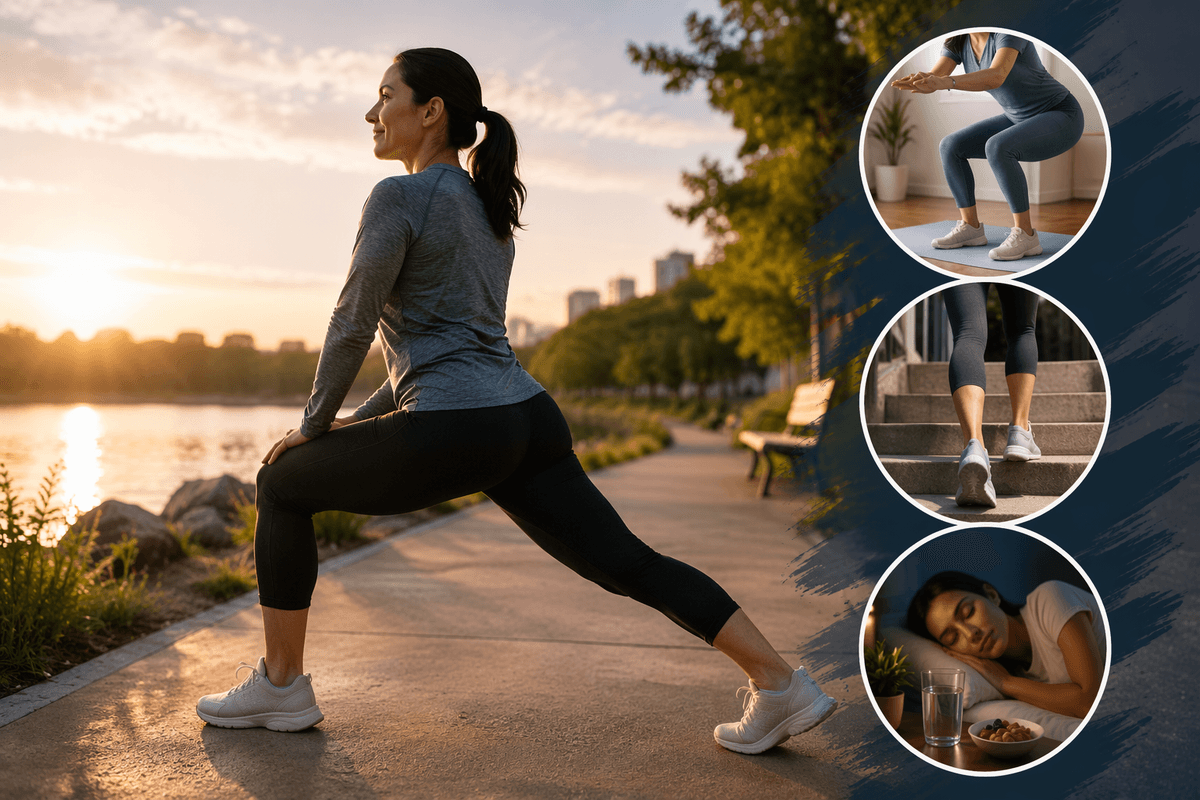
Why joints often feel better with varied movement
The first few steps after a long meeting can feel oddly noisy—knees that creak, hips that seem to “catch,” ankles that need a minute to remember what they’re doing. It’s easy to blame age or yesterday’s workout, but sometimes it’s simply the body switching from one position to another too abruptly.
When you sit or repeat the same motion for a while, the tissues around a joint may stiffen and the muscles that help guide the joint can go a little quiet. The joint itself often feels smoother when it’s getting small changes in angle and load, because movement helps circulate joint fluid and keeps nearby tissues sliding rather than sticking.
That’s why “more exercise” doesn’t always fix it if it’s all one type. A long walk after a low-movement week can still feel rough at first, while a day with a mix—standing, turning, light steps, brief squats to pick something up—may leave joints feeling unexpectedly easier. The comfort can improve with variety, yet flare when the pattern suddenly narrows again.
Small posture shifts that reduce silent joint strain
Halfway through a call, you may notice you’ve been perched on the edge of the chair—knees pulled together, one foot tucked back, shoulders creeping up. Nothing hurts in the moment, but when you stand, the first steps feel tight and a little “rusty,” like the joint has to renegotiate its track.
Small position choices can quietly change where stress collects. A knee that stays bent deep for an hour often keeps the front of the hip and thigh working in a shortened range, while the glutes and low belly muscles contribute less. When those support muscles go offline, joints rely more on passive structures—tendons, joint surfaces, and irritated-feeling soft tissue—to hold you steady.
The shifts that tend to matter are unglamorous: feet flat instead of tucked, hips a touch higher than knees, ribs stacked over pelvis rather than slumped. It may still feel inconsistent—some days a “good” setup helps, other days it doesn’t—but the pattern is often clearer after a week than after a single afternoon.
Strength habits that make movement feel easier
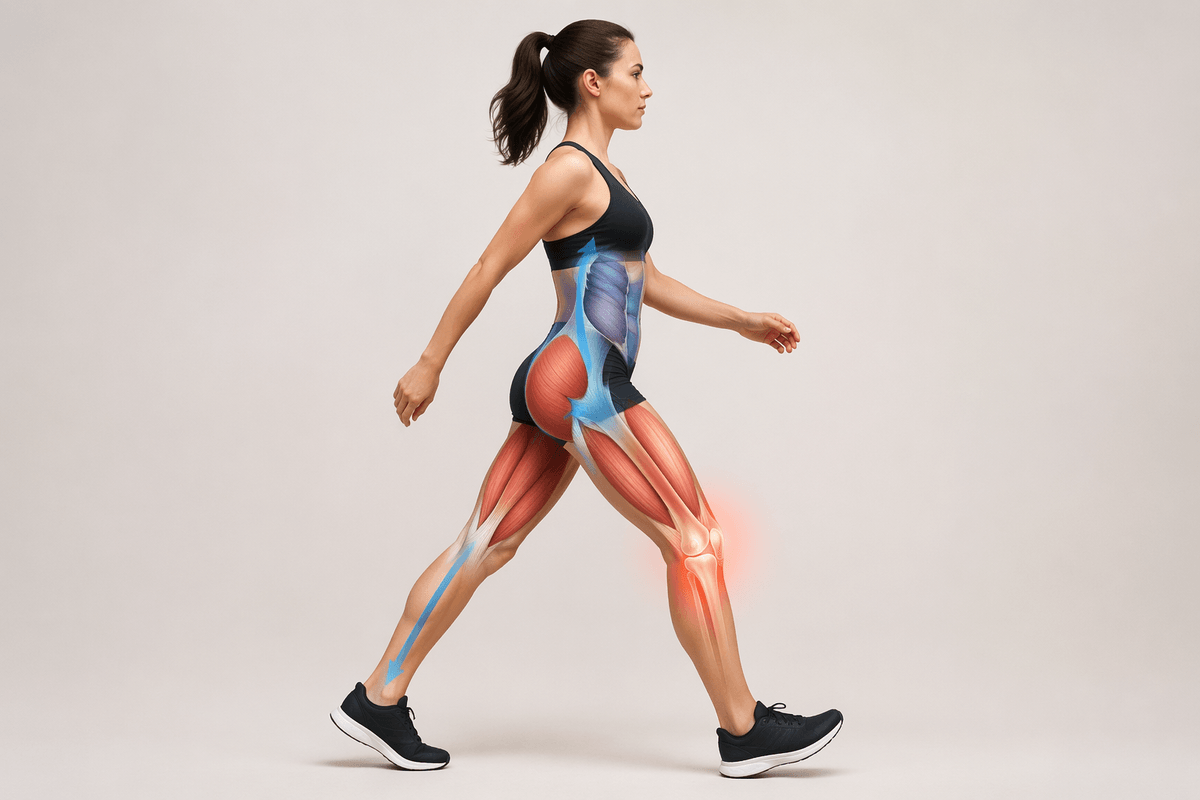
It’s often on the second flight of stairs that you notice it: the legs feel like they’re doing all the work from the front, and the knee on the “bad” side suddenly seems louder. People sometimes assume that means the joint needs more stretching, but in some situations it’s more about which muscles are actually showing up to share the load.
When the glutes, hamstrings, and deeper trunk muscles aren’t contributing much, the body tends to borrow stability from simpler strategies—locking the knees, tipping the pelvis forward, pushing off the toes. That can make movement feel less efficient, so the same walk or workout costs more effort and leaves the hips and knees feeling worked-over. Strength, here, isn’t just “bigger muscles”; it’s the steady ability to produce force in small ranges without bracing.
The strength habits don’t feel dramatic day to day. A few good sessions can make you sore without making stairs easier, while a quieter, repeatable routine often shows up as subtler wins: standing from a chair without a reset, smoother first steps after sitting, and fewer moments where a joint feels like it has to “catch up.”
Walking, stairs, and errands as joint-friendly practice
It’s usually in a parking lot that it shows up: you hop out of the car and head toward the store, and the first minute feels clunky—then, by aisle three, the hips and knees have “warmed” without you doing anything special. That small improvement can be confusing, especially if the same joint felt touchy on yesterday’s longer walk.
Short bouts of walking, a few curb steps, carrying a bag, pausing to look at a shelf—errands quietly add variety. The joint gets different angles and speeds, and the muscles around it take turns stabilizing instead of holding one long, repetitive pattern. In some situations, that shifting load helps the joint surfaces glide and the surrounding tissue move more freely, so the body stops guarding every step.
A “quick run in” can turn into 40 minutes on hard floors, or stairs show up late in the day when support muscles are already tired. When that happens, it may feel like the joint is unreliable, when it’s often the total load—and how suddenly it ramps up—doing most of the talking.
Recovery basics that quietly shape joint comfort
Later that night, it can feel like the joint is “talking” more when you finally stop moving—knees buzzing a little on the couch, hips feeling compressed when you roll over in bed. It’s easy to miss the connection because nothing obvious happened, but recovery often shows up as a background texture: how heavy the legs feel the next morning, or whether the first steps are stiff or surprisingly smooth.
When sleep runs short, hydration dips, or meals skew lighter on protein than usual, the body may recover a little less cleanly from the same errands and stairs. That doesn’t mean anything is “wrong” with the joint; it’s more that the surrounding muscles can feel less ready to share load, so movements that were fine yesterday start to feel louder today. Add long sitting and the tissues that normally glide can feel stickier, so the joint has to work through a cranky first range before it settles.
A tough-feeling knee on Tuesday can be the echo of Sunday’s activity spike plus two uneven nights of sleep, not the one thing you did that morning. When the pattern repeats—stiff starts after low sleep, or soreness that lingers after hard floors—it’s often a quiet recovery signal, not a sudden “new normal.”
When stretching feels logical but backfires
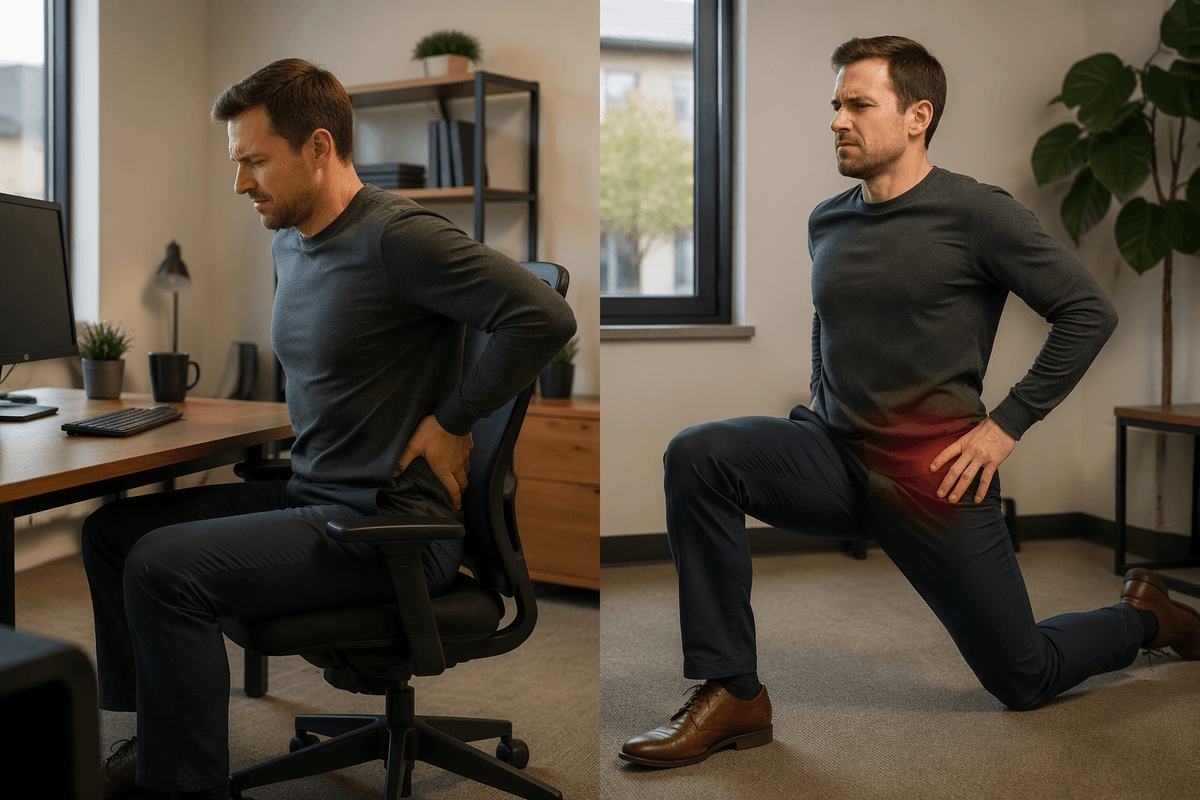
You reach for a stretch because it seems like the obvious fix—especially when the front of the hip feels tight or the knee feels like it won’t “open up” after sitting. Sometimes it does help. Other times, the joint feels weirder afterward, almost more sensitive, like the body noticed it and decided to guard it.
A common misunderstanding is that every tight feeling is a short muscle that needs to be pulled longer. In some situations, that “tightness” is more like a protective brake: the nervous system keeping range limited because the area doesn’t feel supported or warmed up yet. When you push hard into end range, the tissue may respond by tightening more, or the joint can feel compressed—especially if you’re hanging on passive structures instead of getting help from the glutes and trunk.
A gentle, short hold might feel relieving, while a longer, deeper stretch can leave you stiff when you stand back up. If that pattern keeps showing up, it may be less about needing more flexibility and more about needing a different kind of input than “go farther.”
Building habits around flare-ups and uncertainty
Some mornings you do everything “right” and the first steps still feel thick, like the joint didn’t get the memo. It’s tempting to treat that as failure and either push through to prove you’re fine or shut everything down “just in case.” Both reactions make sense—and both can turn a one-off flare into a confusing week.
Flare-ups often arrive as a mismatch: yesterday’s load was higher than your tissues were ready for, or today’s support is lower because you slept poorly, sat longer, or skipped the usual warm-up steps of daily movement. The joint can feel unpredictable, but it’s usually responding to a moving target—total stress, not a single motion you can perfectly avoid.
What tends to hold up over time is a few non-negotiables that don’t depend on motivation: brief movement breaks, a baseline of strength work, and a way to “downshift” on louder days without going to zero. The win is subtle—less drama around bad mornings, and more confidence that stiffness is information, not a verdict.