Why gardening strains backs more than expected
It often starts as a small tightness when you stand up after weeding—nothing dramatic, just a moment where your lower back feels like it needs a second to “unfold.” A lot of people assume the soreness comes from one heavy lift, but more often it’s the long stretch of being slightly bent, reaching forward, and staying there while your attention is on the plants, not your posture.
Gardening asks the back to do two jobs at once: hold you in a forward-leaning position and manage little bursts of effort—pulling, digging, carrying, tossing—without a clean reset between them. When the hips and legs don’t take their share, the low back ends up acting like the hinge and the stabilizer, especially during shallow bends where you’re not quite squatting and not quite standing.
The strain also sneaks in because garden loads are awkward. Soil bags, watering cans, and buckets pull you off-center, and it’s easy to twist while stepping around beds or tools. If the stiff feeling shows up earlier each session, or lingers into the next day, it’s often a “too much, too soon” signal rather than a one-time mishap.
Bending habits that quietly build irritation over weeks
You notice it when you go to rinse your hands and the simple act of standing at the sink feels oddly “tall,” like your back is catching up to the rest of you. That’s often what repeated bending looks like in real life: not one memorable moment, but dozens of small hinges that never quite get paid back with full, easy extension.
The most common pattern is the halfway bend—knees mostly straight, hips only partially involved, arms reaching forward to weed “just a minute longer.” In that position, the low back stays under a steady holding effort while your hands add little tugs and pulls. Over weeks, it can start to feel like the tightness shows up sooner, even if you’re doing the same tasks, because the tissues that tolerate sustained flexion and bracing don’t get much variation.
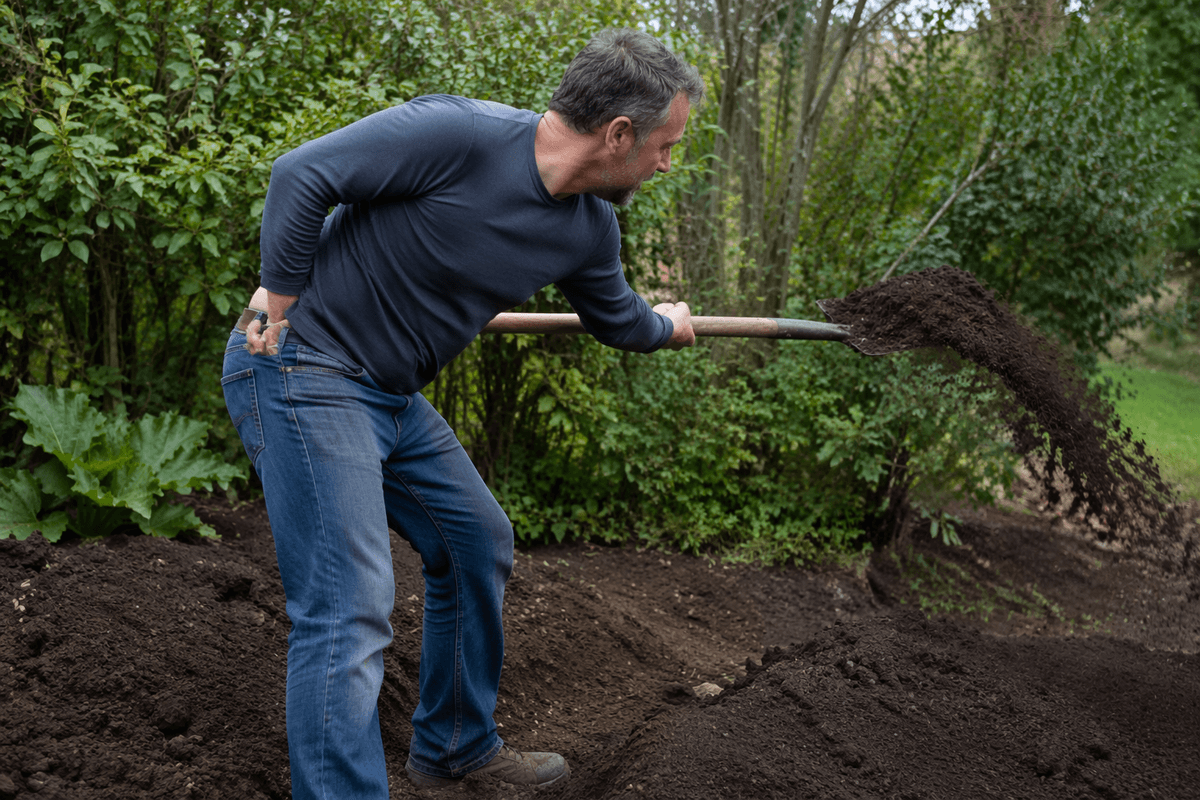
Carrying a bucket with one hand, turning to set it down behind you, or shoveling and tossing soil to the side loads the back a bit asymmetrically. If the next-day stiffness shifts from “normal worked hard” to a more specific, localized soreness—especially after longer bent-over runs—it’s often an early sign that the pattern, not the garden, needs adjusting.
Smart setup choices that reduce unnecessary load
The first clue is usually how far you have to reach. When the bucket ends up behind you and the hand tools are off to one side, you start doing little half-turns and leaning grabs without noticing—until your back feels “busy” even though the work is light. Setting things where your hands naturally fall can take a surprising amount of strain out of an evening session.
Height is the other quiet factor. Working from ground level keeps you in that low, held hinge, and the back becomes the support beam while your arms do the fine work. Raising the task—even a little—often shifts more of the effort into your hips and legs simply because you can keep your chest closer to upright. That might mean using a stool, kneeling on a pad with one foot up, or choosing a spot to pot or prune that doesn’t force you to fold in half.
Loads are easier when they’re predictable. A partly filled watering can or smaller soil container can feel almost “too cautious,” but it reduces the off-center pull that invites twisting as you step around beds. It’s tempting to carry everything at once. But if your stiffness shows up earlier whenever you haul awkward loads, that’s a setup issue you can actually change.
Body mechanics cues that feel awkward at first
The awkward part often shows up in the first few minutes: you try to “hinge” the way people describe, and it feels like you’re sticking your hips back too far, or like your knees are getting in the way. In the garden, that can look like you’re being overly formal about a simple task. But that slightly exaggerated move is often the point—your hips are taking the bend instead of your low back doing the folding and the holding.
A helpful cue is noticing where the effort lands. If weeding makes your back feel like the clamp that keeps everything from tipping forward, you’re probably living in the halfway bend. When you shift to more of a hip-back position (even with a small knee bend), the work may spread into the glutes and thighs, and your hands can move without your spine having to “brace” for every tug.
Stepping your feet to face the bucket instead of twisting and reaching can seem slower, especially when you’re moving around beds. But repeated little rotations under load are the kind that add up—often noticed later as a specific, one-sided soreness that wasn’t there at the start.
The stretch-and-rest mistake that can backfire
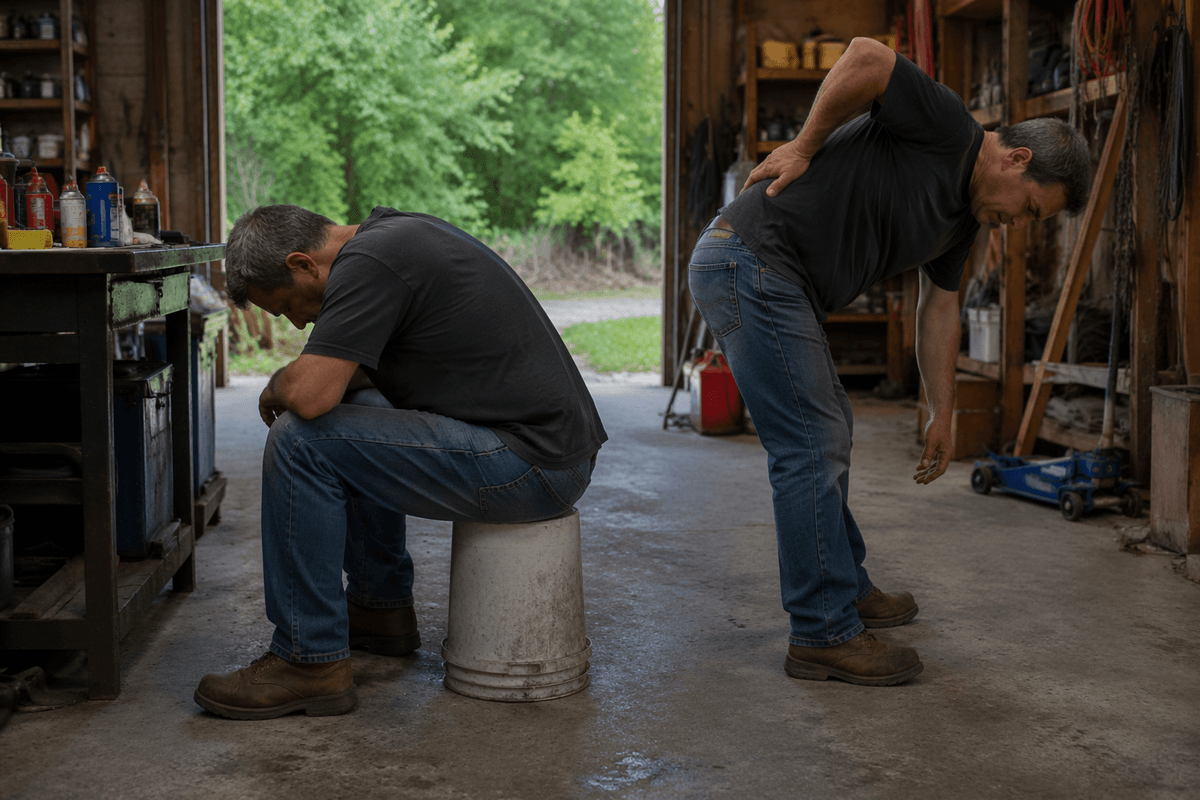
It’s easy to notice the stiffness and assume the fix is a quick stretch right there in the middle of the bed—hands on knees, a hard forward fold, then a long sit on a bucket to “let it calm down.” For some people, that sequence feels good for about thirty seconds, and then the next bend feels even sharper, like the back tightened up in response.
One reason is timing. When you’ve been held in a bent position for a while, the back can already feel guarded and compressed, and a deep end-range stretch can act like another demand instead of a reset. Then the long rest leaves everything cooled down and a little less prepared for the next lift or twist, so the first few movements back in can feel surprisingly stiff.
If the pattern repeats—stretch hard, sit too long, return to the same low work position—the back never gets an easy “middle range” break, and the irritation can build even though you’re doing what seems like the responsible thing.
Pacing and task rotation for steadier comfort
Halfway through a bed, you might notice you’re holding your breath a little—one more weed, one more scoop—because stopping feels like it will break your momentum. That’s usually when the low back starts to feel thick and “worked,” even if nothing hurts sharply. The tricky part is that your hands can keep going long after your back has stopped getting little position changes, so the stress builds quietly.
Pacing in the garden is less about formal breaks and more about changing the job before your back has to complain. Ten minutes of close-in weeding, then a few minutes of something upright—watering, pruning, resetting tools—gives the tissues that hate sustained bending a chance to unload. If you wait until you’re stiff to switch tasks, you’re already behind, and the next lift or twist tends to feel heavier than it should.
Rotation also matters with how you carry and shovel. Switching sides, splitting loads into smaller trips, and avoiding long “one-direction” runs can keep the strain from settling into one spot. It won’t feel perfectly consistent every day, but if your stiffness shows up later in the session—or fades faster afterward—that’s usually a sign the pacing is doing its job.
Signals your back wants a different approach
You finish the last pass, straighten up, and notice you’re walking a little stiff—almost like your hips and back are negotiating who’s going to move first. That “stuck for a moment” feeling isn’t always a red flag, but it’s a useful signal. When it shows up earlier each session, or you need more time and more steps before you feel normal again, your back is often telling you the dose of bending and bracing is outpacing your recovery.
Pay attention to the quality of the discomfort, not just the intensity. A dull ache that fades as you move is different from a sharp catch when you reach, lift, or turn. So is a soreness that stays vague versus one-sided tightness that keeps returning to the same spot after shoveling or carrying. Those patterns often point to repeated twisting, off-center loads, or staying in one low position too long, even if each individual task felt “light.”
The other quiet sign is compensation: you start using your hands on your thighs to stand, you avoid turning one direction, or you keep finding reasons to work from the same side of the bed. In the moment it feels like being careful. If it keeps happening, it’s usually your body asking for a different approach—less time folded over, fewer awkward carries, and more variety before the back has to force the change.