Why day trips make Tokyo feel bigger
I hesitated the first time I pulled up the rail map: Tokyo already felt enormous, so why spend a “precious” day leaving it? But after a few nights, the city’s scale starts to blur—neighborhoods are different, yet your days still rhyme (stations, crowds, another great meal, another late return). A day trip breaks that loop fast, and it does it without the packing, check-out times, and luggage drag of switching hotels.
The catch is that day trips magnify your choices as much as your experience. From Tokyo, you can be in a temple town, on a rugged coast, or staring at mountain silhouettes in roughly the same door-to-door window—yet the feel of the day changes dramatically depending on transfers, train type, and how early you leave. If you pick well, you get a “second Japan” in one day; if you pick poorly, you get a long commute with a short highlight reel.
For a 6–8 night stay, thinking in 2–4 day trips usually lands in the sweet spot: enough contrast to make Tokyo feel bigger, not so many early alarms that you stop enjoying your base. The goal isn’t to collect famous names—it’s to choose the kind of friction you can live with: an early start for quieter streets, or a later start with heavier crowds but a calmer pace.
How to choose the right day trip for you
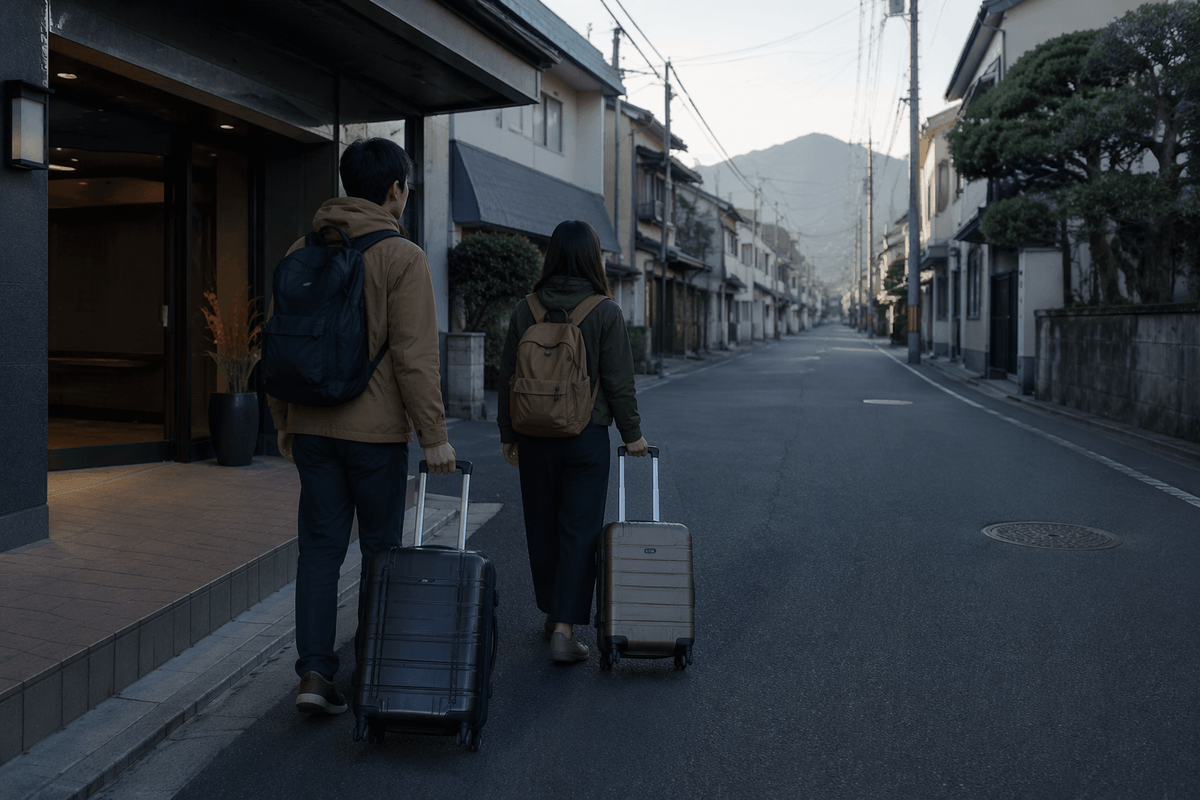
On the morning you’re actually picking, it helps to decide what you’re optimizing for: “one big wow view,” “a temple-and-street-wander day,” or “a nature reset where we don’t think too hard.” The decision sounds fluffy, but it controls everything practical—especially transfers. As a couple on trains, I’d treat anything with more than one major transfer (or a bus you can’t time confidently) as a day that will feel longer than it looks on a map, even if the headline destination is famous.
Next, set your tolerance for early starts, because it’s the cleanest lever you have against crowds. If you’ll leave your hotel by 7:00–7:30 a.m., you can choose places that get swamped by late morning and still feel like you “owned” the day; if that sounds miserable on vacation, pick a trip that’s enjoyable even when busy (think walkable towns and food stops rather than a single viewpoint). Cost matters too: some routes reward a pass only if you commit to a specific rail line all day; otherwise, simple pay-as-you-go often buys you flexibility when weather (or energy) shifts.
Finally, build a Plan B that shares the same exit station. If clouds kill your Fuji hopes or rain makes coastal paths annoying, you want a swap that doesn’t require re-learning the whole commute—just a different loop once you arrive.
Classic culture escapes: temples, towns, heritage
I remember standing on the platform with “Nikkō” and “Kamakura” open on my phone, realizing they promise the same headline—temples and heritage—but deliver totally different days. If you want the simplest culture hit with the least logistical drama, Kamakura tends to win: it’s close, mostly walkable once you arrive, and even if you miss an early train you can still have a satisfying loop of shrines, the big Buddha, and a beach-side decompression before dinner back in Tokyo. The catch is that it fills up fast late morning, and the most famous spots can feel like a conveyor belt if you arrive after 10:00.
Nikkō is the “commitment” option: earlier start, longer rail time, and you’ll feel the day’s edges more (especially in winter, when daylight drops and the cold makes lingering harder). In exchange, the heritage core is genuinely dramatic—ornate structures, cedar-lined approaches, and a sense of scale you don’t get in closer towns. It works best if you decide upfront whether you’re doing “shrines only” (less rushing, fewer transfers) or adding the lake area (more scenery, but buses and timing start to matter).
If you’re tempted by a smaller town feel without a marathon commute, Kawagoe is the calm, mid-range-budget-friendly compromise: historic streets, snack stops, and a pleasant half-day pace that doesn’t punish you for sleeping in. It’s less jaw-dropping than the marquee names, but it’s also the kind of place where crowds feel manageable because the experience is spread out, not bottlenecked into one perfect photo spot.
Nature reset: coasts, lakes, mountains, hot springs
My most common Tokyo day-trip debate isn’t “where,” it’s “how exposed do we want to be to weather?” Nature days can be euphoric when the sky cooperates and oddly deflating when it doesn’t, so I’d pick one option that’s view-dependent (Fuji/Hakone) and one that’s satisfying even under clouds (coast or a hot-spring town). That way you’re not gambling two separate mornings on the same forecast, and you’re less likely to turn a day off into a long, gray commute.
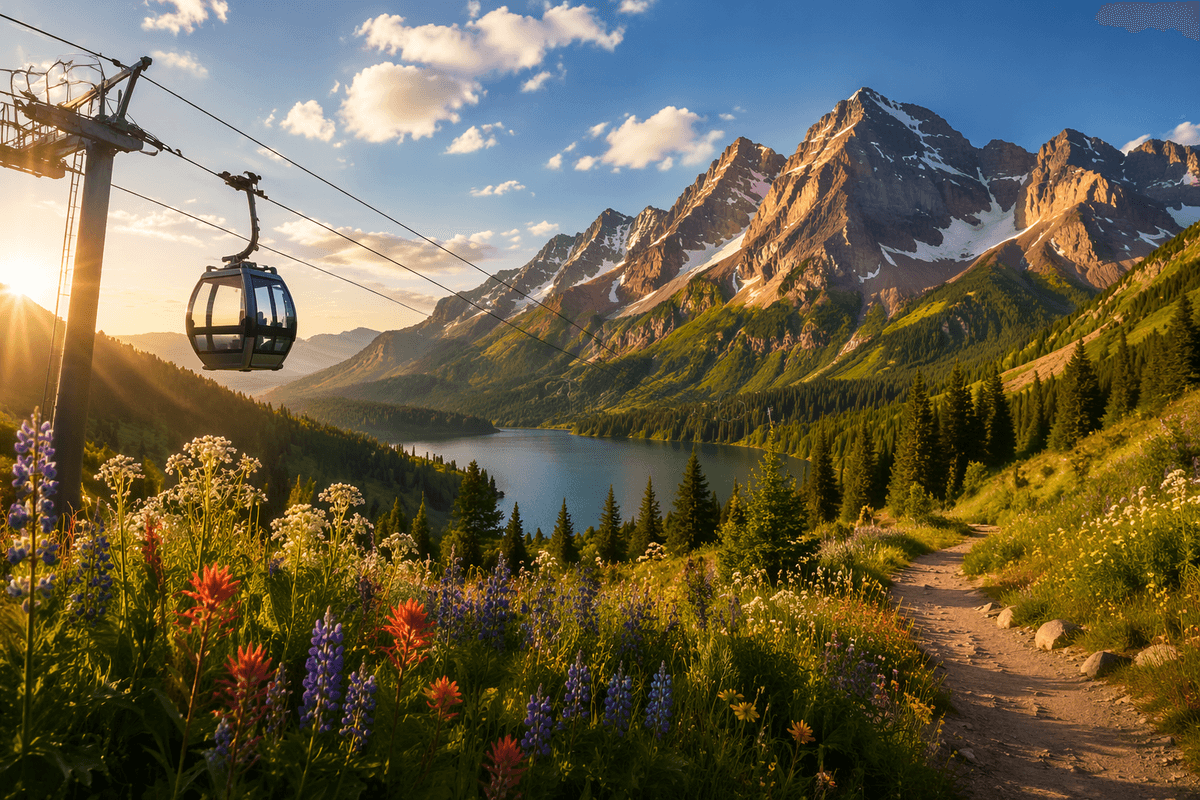
If you want the headline “wow,” the Fuji side (Kawaguchiko area) pays off on clear days—but it’s also the most brittle plan: you’re doing it for the mountain, and when it hides, you feel it. Hakone is more forgiving because you can “trade” views for experiences: lakeside walks, ropeway/cable car loops, museums, and an onsen finish. The catch is that Hakone’s loop adds moving parts (and crowds concentrate at the same chokepoints), so an early start matters more here than on a simple town-and-temple day.
For a lower-friction reset, the coast near Kamakura/Enoshima works well because you can downshift without chasing a single viewpoint—walk until you’re tired, snack, sit by the water, then bail whenever you’ve had enough. Hot springs are the best recovery move, but they cost more and take more commitment; I like them at the end of a longer day because they make the return train feel optional rather than urgent.
Food and craft detours: markets, makers, local specialties
I usually decide on a food-and-craft day trip when we’re tired of “booking a big thing” and just want a day that can flex if we wake up late. The key is choosing places where the reward is spread across small stops—so if one shop is slammed or sold out, the day doesn’t collapse. That’s why I like destinations that are walkable from a single station and don’t require a timed bus to reach the “one” market.
Kawagoe works surprisingly well in this lane: it’s close enough that you can treat it like a long lunch with bonuses—sweet potato snacks, old-style storefronts, and little craft counters—without paying the Nikko/Hakone time tax. The limitation is that the most photogenic streets get busy in the middle of the day, so the experience shifts from “browse” to “shuffle” if you arrive late; if you’re not leaving Tokyo until after 10:00, I’d lean into backstreets and plan one sit-down café to slow the pace.
If you want a more “this could only be Japan” food hit, I’d put a Tsukiji Outer Market morning in the same category as a day trip even though it’s still in Tokyo—because it scratches the market itch with almost zero rail complexity. It isn’t a calm, locals-only market (lines and markups are real), but for first-timers it’s efficient: go early, eat two or three focused things, then pivot to a neighborhood stroll instead of trying to sample everything and getting stuck in crowds.
Logistics that make day trips effortless
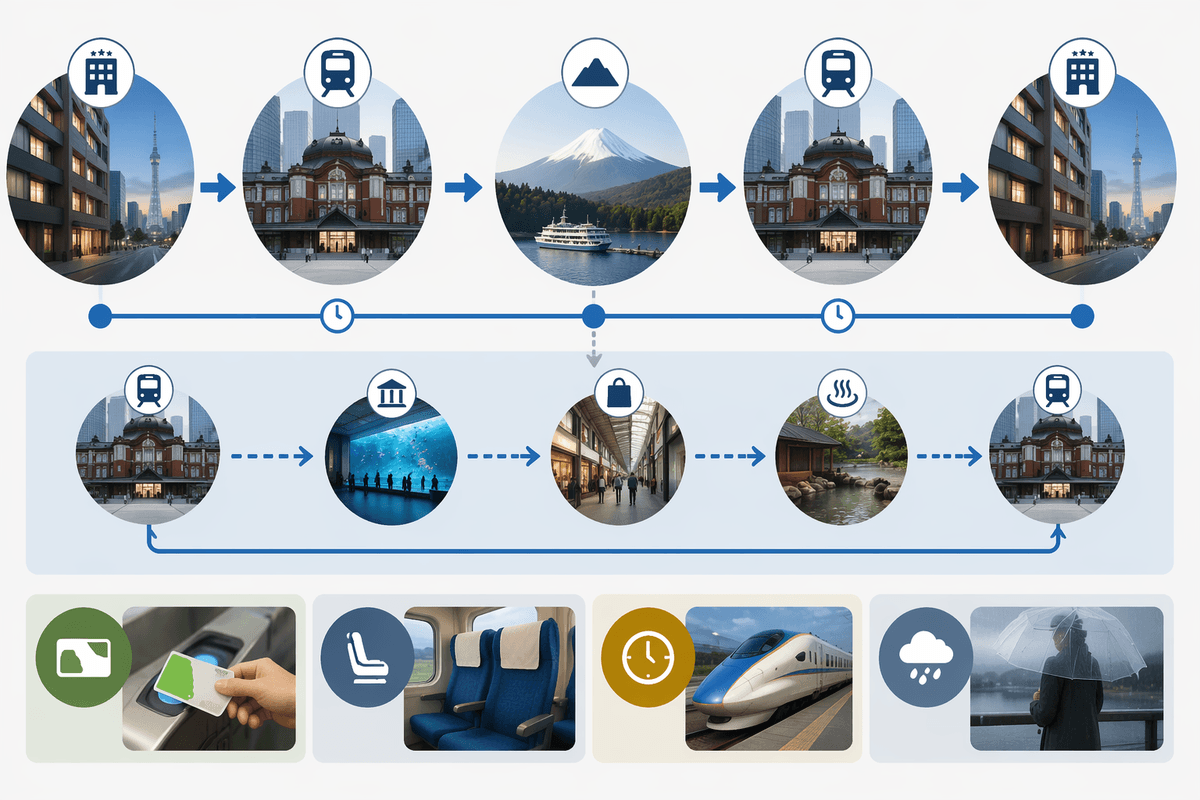
The moment day trips started feeling easy for us was when we stopped treating them like “mini tours” and started treating them like train errands with a great payoff. The difference was small but practical: we picked one departure station in Tokyo (Tokyo, Shinjuku, Ueno—whatever matched our hotel) and designed each day to leave and return through that same hub. It sounds rigid, but it actually reduced friction; once you’ve done one smooth outbound, you’re not relearning signage, platforms, and transfer patterns while half-awake.
Ticketing is where first-timers accidentally add stress. If you’re mostly doing straightforward JR routes, pay-as-you-go with an IC card keeps you flexible when weather shifts or you decide to head back early; the limitation is that you can’t “hack” your cost after the fact. Passes (Hakone Freepass-style) shine when you’ll actually use the whole loop, but they become annoying when you want to skip a segment because you’re tired or queues are ugly. For anything reservation-prone (especially limited express seats), book earlier than you think you need—not because it’s always sold out, but because your ideal departure time is the first thing to vanish.
Crowds are mostly a timing problem, not a destination problem. If you can leave your hotel by 7:00–7:30 a.m., you buy yourself calmer streets and shorter lines later; if that’s not realistic, choose trips where you can keep moving (walkable towns, coast days) instead of places with one bottleneck attraction. And always keep one “same station, different loop” backup in your notes—rain doesn’t ruin a day as much as a plan that can’t bend.
Choosing your ‘one perfect’ Tokyo day trip
We nearly over-optimized our “one perfect” day trip—comparing Nikko vs. Hakone vs. Fuji like it was a spreadsheet problem—until we realized the real question was what kind of tired we could tolerate: early alarm tired, transfer-and-queue tired, or long-walk tired. If you want the cleanest win with minimal moving parts, pick a close, walkable loop (Kamakura + a coast add-on, or Kawagoe) and accept that it may be busy but still controllable because you can keep moving. If you’re chasing a single iconic view (Fuji), treat it like a weather bet: commit to an early departure and keep a same-station fallback in your notes for clouds.
If you’re choosing 2–4 trips for a 6–8 night stay, I’d mix one “big ticket” commitment day (Nikko or Hakone/Fuji) with one low-friction flex day (Kamakura/coast or Kawagoe) and then add a third only if you’re genuinely enjoying early starts. The small decision cue that saved us: if you wouldn’t happily do the outbound commute twice, don’t stack two high-effort days back-to-back—your Tokyo days will feel better, and you’ll still get the contrast you came for.